

On a Tuesday afternoon, you can find the typical scene in almost any after-school program in a mid-sized American city: kids slumped over homework, sneakers squeaking on gym floors, and the occasional argument over a snack. However, there are decks of cards hidden between the folding tables and the backpacks in an increasing number of programs. Not Pokémon. The Gathering is not magic. Children are trading, debating, and incorporating sociology trading cards—small printed rectangles with ideas like confirmation bias, agenda-setting, gatekeeping, and source credibility—into decks as though they truly matter. It turns out that they do.
At first, the concept seems strange. There has always been a sense of competition in trading cards: find the rare ones, assemble the best deck, and win. However, game-based learning researchers and educators have long recognized that collectible card games have a unique effect on players. They insist on reading. They insist on a plan. They insist on social compromise. Students’ attention, social interaction, and teamwork all increased during gameplay, according to a 2014 review of instructional computer card games. This was due to the mechanics of card play, not teacher pressure. Sociology trading cards use the same reasoning to highlight a need that children actually have: the capacity to read the media environment without becoming engrossed in it.
Media literacy may seem like a topic better suited for a high school elective because it is abstract, dry, and full of vocabulary words that are difficult to understand. These programs are specifically designed to address that issue. Something changes when a thirteen-year-old is given a card with the words “Framing Effect” on one side and an actual news headline on the other by a facilitator. The idea ceases to be theoretical. It turns into a tool that you can hold, exchange, and debate with the child seated across the table. The weight of a card, the process of selecting which one to play, and the slight competitive pressure of facing someone who may be more knowledgeable than you are all aspects of physical objects in learning environments that screens can’t quite match.
Sessions in programs that use these decks are typically organized around debate and deck-building. Children are asked to choose cards from their deck that explain a scenario, such as a news clip, a photo with a deceptive caption, or a viral social media post. Who is in charge of the message? Whose voices are absent? How does the source want you to feel? The structure of the game encourages reluctant participants to participate, but it’s more akin to a Socratic discussion than a card game. Complex multiplayer mechanics in collectible card games have been found by researchers to promote community formation. While these mechanics can occasionally intimidate new players, they also draw them into conversations they might otherwise avoid. While maintaining the social glue, sociology trading cards remove some of that complexity.
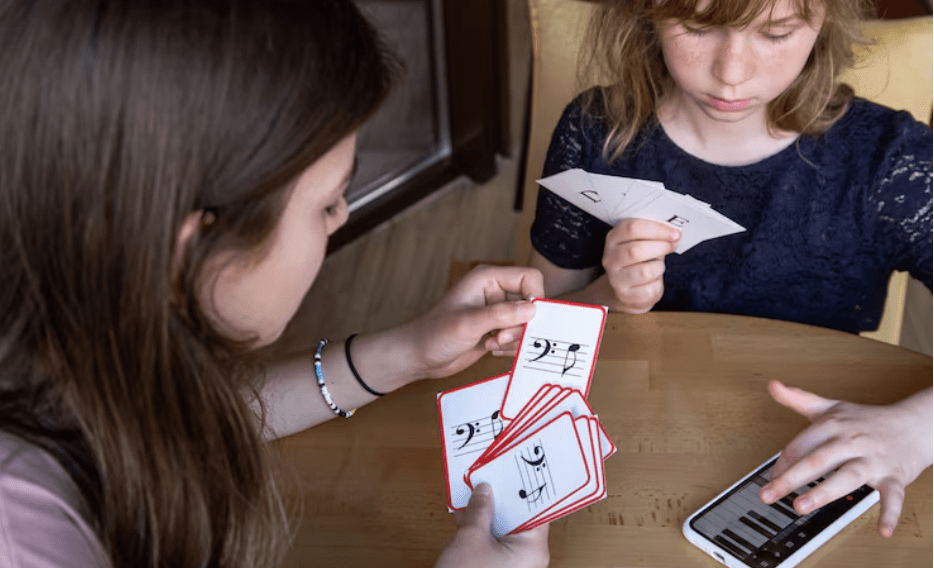
It’s important to note how organically these discussions transcend the cards themselves. In the middle of a class, a group of middle school students may begin by debating whether a news source is “biased” based on the card they are holding. They may then discuss why they distrust particular sources, what their parents watch, and what their friends share. In a formal classroom setting, it is difficult to create that kind of sideways drift into true critical thought. Regular school days don’t allow for the looseness that after-school programs do; there is less pressure to perform well on tests and more flexibility to let a conversation take unexpected turns.
How much of this sticks is still up in the air. Measuring media literacy is infamously challenging. When scrolling through a feed on a Saturday, a child who can identify the framing effect on a Tuesday does not automatically apply it. There are still few longitudinal studies on game-based learning outcomes, and those that do tend to concentrate on more specific cognitive abilities rather than the kind of habitual, layered skepticism that is truly necessary for good media literacy. These programs’ educators appear to be conscious of the gap. The majority of them don’t claim to be transformed. They are making the more modest claim that children leave with a vocabulary, a few new questions, and perhaps a little longer pause before sharing something they haven’t actually read.
Even though that pause seems insignificant, it could be the whole point. While teaching children to recognize deepfakes or dissect propaganda is more dramatic than teaching them to slow down before reacting, it may be more long-lasting. Because they make that slowdown feel more like a game move than an adult lecture, sociology trading cards are effective. Additionally, teaching children to approach a headline with curiosity, skepticism, and a question about what it’s really trying to accomplish is about as useful a skill as any program can provide in the attention economy that children are growing up in.
