
Close Menu
Theory CardsTheory Cards
  • Home
  • Contact
  • Privacy Policy
  • Terms of Service
  • Disclaimer
  • About
  • Trading Cards
  • Trending
  • News
What's Hot

Why the Foucault Theory Card Is the One Product Every Philosophy of Power Course in America Should Own

July 2, 2026

How Sociology Trading Cards Are Being Used to Teach Media Literacy in After-School Programs

July 2, 2026

The Cultural Theory Trading Card That Teachers Banned — and Why That Only Made Students Want It More

July 2, 2026
Theory CardsTheory Cards
Subscribe Login
  • Home
  • Contact
  • Privacy Policy
  • Terms of Service
  • Disclaimer
  • About
  • Trading Cards
  • Trending
  • News
Theory CardsTheory Cards
  • Home
  • Buy Now
Home » How Sociology Trading Cards Are Being Used to Teach Media Literacy in After-School Programs
Trading Cards

How Sociology Trading Cards Are Being Used to Teach Media Literacy in After-School Programs

Melissa BridwellBy Melissa BridwellJuly 2, 2026No Comments5 Mins Read
Facebook Twitter Pinterest LinkedIn Tumblr WhatsApp VKontakte Email
Sociology Trading Cards
Share
Facebook Twitter LinkedIn Pinterest Email

On a Tuesday afternoon, you can find the typical scene in almost any after-school program in a mid-sized American city: kids slumped over homework, sneakers squeaking on gym floors, and the occasional argument over a snack. However, there are decks of cards hidden between the folding tables and the backpacks in an increasing number of programs. Not Pokémon. The Gathering is not magic. Children are trading, debating, and incorporating sociology trading cards—small printed rectangles with ideas like confirmation bias, agenda-setting, gatekeeping, and source credibility—into decks as though they truly matter. It turns out that they do.

At first, the concept seems strange. There has always been a sense of competition in trading cards: find the rare ones, assemble the best deck, and win. However, game-based learning researchers and educators have long recognized that collectible card games have a unique effect on players. They insist on reading. They insist on a plan. They insist on social compromise. Students’ attention, social interaction, and teamwork all increased during gameplay, according to a 2014 review of instructional computer card games. This was due to the mechanics of card play, not teacher pressure. Sociology trading cards use the same reasoning to highlight a need that children actually have: the capacity to read the media environment without becoming engrossed in it.

Media literacy may seem like a topic better suited for a high school elective because it is abstract, dry, and full of vocabulary words that are difficult to understand. These programs are specifically designed to address that issue. Something changes when a thirteen-year-old is given a card with the words “Framing Effect” on one side and an actual news headline on the other by a facilitator. The idea ceases to be theoretical. It turns into a tool that you can hold, exchange, and debate with the child seated across the table. The weight of a card, the process of selecting which one to play, and the slight competitive pressure of facing someone who may be more knowledgeable than you are all aspects of physical objects in learning environments that screens can’t quite match.

Sessions in programs that use these decks are typically organized around debate and deck-building. Children are asked to choose cards from their deck that explain a scenario, such as a news clip, a photo with a deceptive caption, or a viral social media post. Who is in charge of the message? Whose voices are absent? How does the source want you to feel? The structure of the game encourages reluctant participants to participate, but it’s more akin to a Socratic discussion than a card game. Complex multiplayer mechanics in collectible card games have been found by researchers to promote community formation. While these mechanics can occasionally intimidate new players, they also draw them into conversations they might otherwise avoid. While maintaining the social glue, sociology trading cards remove some of that complexity.
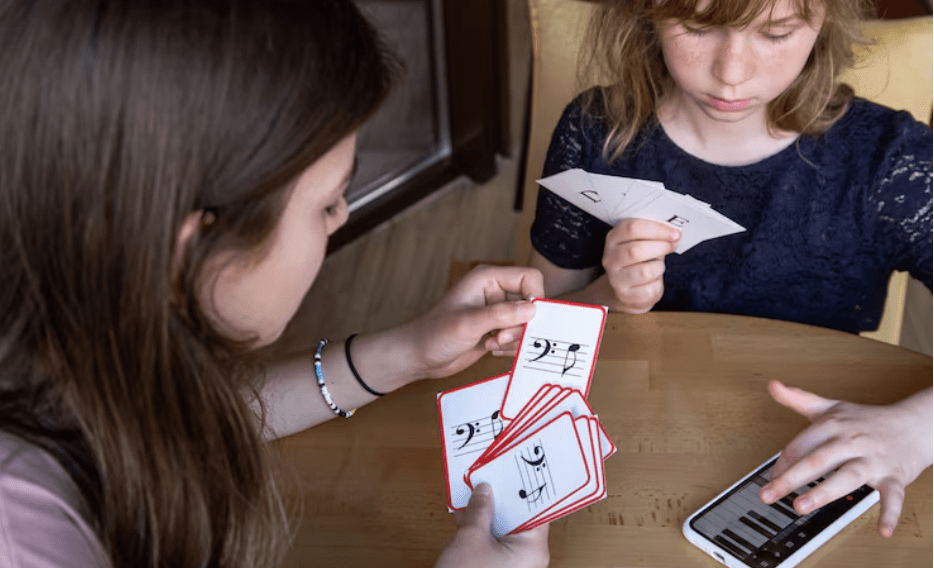
Sociology Trading Cards

It’s important to note how organically these discussions transcend the cards themselves. In the middle of a class, a group of middle school students may begin by debating whether a news source is “biased” based on the card they are holding. They may then discuss why they distrust particular sources, what their parents watch, and what their friends share. In a formal classroom setting, it is difficult to create that kind of sideways drift into true critical thought. Regular school days don’t allow for the looseness that after-school programs do; there is less pressure to perform well on tests and more flexibility to let a conversation take unexpected turns.

How much of this sticks is still up in the air. Measuring media literacy is infamously challenging. When scrolling through a feed on a Saturday, a child who can identify the framing effect on a Tuesday does not automatically apply it. There are still few longitudinal studies on game-based learning outcomes, and those that do tend to concentrate on more specific cognitive abilities rather than the kind of habitual, layered skepticism that is truly necessary for good media literacy. These programs’ educators appear to be conscious of the gap. The majority of them don’t claim to be transformed. They are making the more modest claim that children leave with a vocabulary, a few new questions, and perhaps a little longer pause before sharing something they haven’t actually read.

Even though that pause seems insignificant, it could be the whole point. While teaching children to recognize deepfakes or dissect propaganda is more dramatic than teaching them to slow down before reacting, it may be more long-lasting. Because they make that slowdown feel more like a game move than an adult lecture, sociology trading cards are effective. Additionally, teaching children to approach a headline with curiosity, skepticism, and a question about what it’s really trying to accomplish is about as useful a skill as any program can provide in the attention economy that children are growing up in.

Sociology Trading
Share. Facebook Twitter Pinterest LinkedIn Tumblr WhatsApp Email
Previous ArticleThe Cultural Theory Trading Card That Teachers Banned — and Why That Only Made Students Want It More
Next Article Why the Foucault Theory Card Is the One Product Every Philosophy of Power Course in America Should Own
Melissa Bridwell

    Melissa Bridwell is a Professor at Cambridge University and Senior Editor at theorycards.org.uk, where she writes about Theory Trading Cards, David Gauntlett's iconic sociology card series, and the thinkers who shaped modern cultural and media theory. Melissa brings both scholarly accuracy and sincere passion to every piece she writes. She has a strong academic foundation and a contagious enthusiasm for the nexus of ideas and collectibles. Her writing brings complex theory to life and makes it worthwhile, whether she is deciphering the philosophy behind a Foucault card or following Bell Hooks' cultural legacy.

    Related Posts

    The Cultural Theory Trading Card That Teachers Banned — and Why That Only Made Students Want It More

    July 2, 2026

    The Tecmo Super Bowl Is Coming Back — as a Topps Trading Card Set, Nostalgia Has Never Cost More

    June 30, 2026

    Theory Trading Cards Just Got a Social Justice Expansion, Here’s Who Made the Cut — and Who Didn’t

    June 29, 2026

    Disney Lorcana Just Dropped Toy Story Cards, The TCG Market Is Going Completely Wild

    June 29, 2026
    Leave A Reply Cancel Reply

    Don't Miss
    Theory Cards

    Why the Foucault Theory Card Is the One Product Every Philosophy of Power Course in America Should Own

    By Melissa BridwellJuly 2, 20260

    The same irritated expression can be seen in almost every American philosophy or political theory…

    How Sociology Trading Cards Are Being Used to Teach Media Literacy in After-School Programs

    July 2, 2026

    The Cultural Theory Trading Card That Teachers Banned — and Why That Only Made Students Want It More

    July 2, 2026

    Why the Most Impactful Educational Tool of the 2000s Is a Pack of 32 Cards About Michel Foucault

    July 2, 2026

    Theory Trading Cards Were Designed for British Students, American Professors Are Using Them Better

    June 30, 2026

    Why a Single Rookie Class Is Already Being Called the Best Hobby Year in a Decade

    June 30, 2026
    About Us
    About Us

    We are a group of writers, researchers, educators, and academic enthusiasts who think that everyone should be able to understand complicated concepts, not just those who have access to postgraduate seminars or university libraries. Our editorial focus lies at the nexus of media studies, sociology, cultural theory, and the surprisingly rich collecting culture that has developed around David Gauntlett's seminal educational card series since its inception at theory.org.uk in 2000.

    You've come to the right place whether you're a student discovering Foucault for the first time, a teacher searching for cutting-edge teaching resources, a collector searching for the AltaMira Press edition, or just someone wondering why a deck of cards with deceased theorists has become one of the most popular academic resources of the past 25 years.

    Our Picks

    Why the Foucault Theory Card Is the One Product Every Philosophy of Power Course in America Should Own

    July 2, 2026

    How Sociology Trading Cards Are Being Used to Teach Media Literacy in After-School Programs

    July 2, 2026

    The Cultural Theory Trading Card That Teachers Banned — and Why That Only Made Students Want It More

    July 2, 2026

    Why the Most Impactful Educational Tool of the 2000s Is a Pack of 32 Cards About Michel Foucault

    July 2, 2026

    Theory Trading Cards Were Designed for British Students, American Professors Are Using Them Better

    June 30, 2026
    Disclaimer

    The opinions published on theorycards.org.uk represent the views of the individual contributors who expressed them. They are published as third-party opinion and do not constitute the editorial position of theorycards.org.uk. We do not endorse, validate, or take responsibility for the accuracy, completeness, or suitability of third-party opinions published on this site.

    All financial data, market analysis, investment-related viewpoints, and commentary on collectible valuations posted on theorycards.org.uk are solely intended for general informational purposes. It does not amount to investment advice, financial advice, or a suggestion for any particular course of action. Before making any financial or investment decisions, including those pertaining to the buying, selling, or appraisal of collectibles, we strongly advise speaking with a licensed and regulated financial expert.

    Any political commentary, policy analysis, or viewpoint on governmental, legal, or regulatory issues posted on theorycards.org.uk solely represents the opinions of the named contributor and does not represent legal or political advice. Before acting on any political, legal, or regulatory information found on this website, we highly advise obtaining competent legal advice.

    We publish third-party opinions as they are received from contributors and present news, updates, and developments as they are reported and made available. Any information on theorycards.org.uk should never be used as a replacement for expert financial, legal, academic, or other advice.

    • Home
    • Contact
    • Privacy Policy
    • Terms of Service
    • Disclaimer
    • About
    • Trading Cards
    • Trending
    • News
    © 2026 ThemeSphere. Designed by ThemeSphere.

    Type above and press Enter to search. Press Esc to cancel.

    Sign In or Register

    Welcome Back!

    Login to your account below.

    Lost password?