Blog

  • The Sociology Trading Card That Every Media Studies Student in America Knows by Heart — but Can’t Explain

    The Sociology Trading Card That Every Media Studies Student in America Knows by Heart — but Can’t Explain

    When you walk through the back rows of a freshman lecture hall in late September, the trading card is the first thing you notice. Half-laminated and occasionally coffee-stained, it is tucked into a binder. A neat column of “five fun facts” appears on one side, while a black-and-white photo of a sociologist—typically McLuhan, occasionally Goffman, and occasionally Stuart Hall if the professor is feeling ambitious—appears on the other. There will be a long pause if you ask the student who made it what the theorist actually argued. They will respond right away if you ask them what year the theorist was born.

    It’s an odd custom that has subtly emerged as one of the most common experiences in media studies education in the United States. In the last ten years, nearly every student who completes an introductory course in communications or sociology has made one. Students are asked to locate five fascinating facts about a sociologist and present them on cards in this assignment, which was initially taken from the open-source curriculum of Lumen Learning. Not too harmful. Even useful. However, it seems as though it has strayed from its original intent.

    Topic SnapshotDetails
    Subject of ArticleThe sociology trading card classroom assignment
    OriginLumen Learning’s Introduction to Sociology module
    Common SettingFirst-year university Media Studies and Sociology courses, U.S.
    FormatIndex card or digital card with photo, dates, five “fun facts”
    Most-Cited TheoristMarshall McLuhan, 1964 — “the medium is the message
    Typical Length of AssignmentOne page, five facts minimum
    Cultural ReachUsed in hundreds of OER-based syllabi since the early 2010s
    Companion ReadingOften paired with BC Open Textbooks’ Introduction to Sociology
    Student Recall RateHigh for names and faces, low for actual theory
    Assessment WeightUsually 5 to 10 percent of course grade

    You’ll typically get a half-laugh if you bring it up in a faculty lounge. Because it serves as an icebreaker, professors adore it. Because it’s not a paper, students adore it. Because it looks great in photos for the program brochure, administrators adore it. The question of whether anyone is truly learning sociology from it seems to be one that most people are happy to ignore.

    The genre’s patron saint is Marshall McLuhan. More student cards feature his face than any other—that specific 1960s photo, the too-wide jacket, and the somewhat amused expression. Students note that he first used the phrase “the medium is the message” in 1964. They hardly ever put what he meant in writing. Rarely does Pamela Shoemaker’s work on media gatekeeping make the cut, despite being cited thousands of times in scholarly works. She’s not as good at taking pictures.

    This is a deeper story about the evolution of introductory courses. Instead of democratizing knowledge, open educational resources have standardized a few assignments that are now repeated on hundreds of campuses. Among them is the trading card. It moves smoothly between curricula. Administrative review is successful. It appears to be engagement.

    The Sociology Trading Card That Every Media Studies Student in America Knows by Heart — but Can't Explain
    The Sociology Trading Card That Every Media Studies Student in America Knows by Heart — but Can’t Explain

    As this develops over several semesters, it’s difficult to avoid wondering if the assignment imparts a subtle lesson that no one intended: that an idea’s surface, the face attached to it, and the date stamped next to it are sufficient. The real debate can be postponed until graduate school or never. Students are more than capable of doing more in-depth work. Simply put, the cards don’t request it.

    There is no end in sight for the assignment. For the program newsletter, it is too practical, too shareable, and too visually appealing. Additionally, a generation of media studies majors who can recognize Erving Goffman from a thumbnail but are unable to sum up The Presentation of Self in Everyday Life when asked is almost endearing. Perhaps McLuhan was always making this point. In actuality, the message is the medium. The curriculum is now the card.

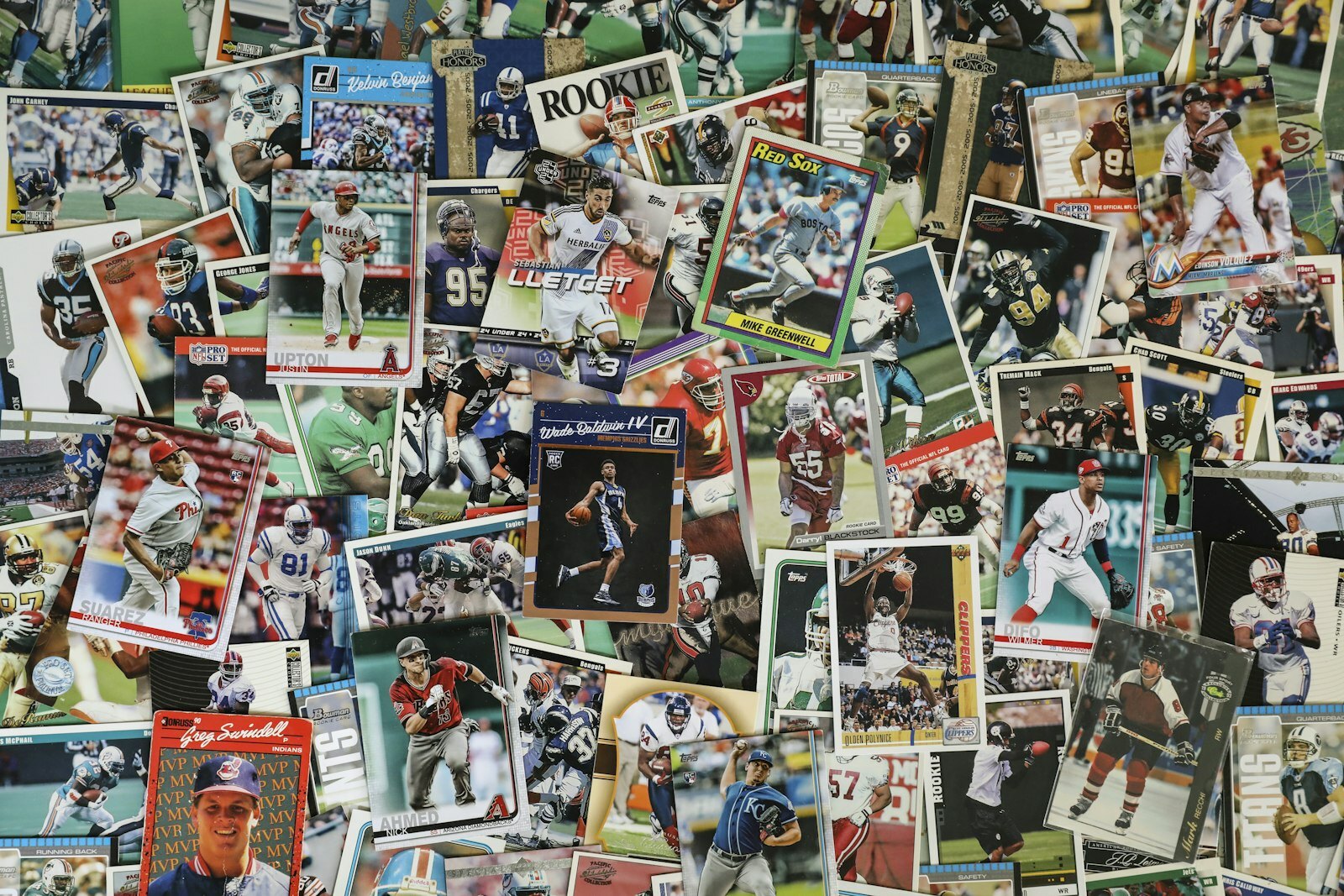
  • The Storage Unit Flip That Started With Baseball Cards and Ended With a $40,000 Discovery

    The Storage Unit Flip That Started With Baseball Cards and Ended With a $40,000 Discovery

    The actual auction wasn’t particularly noteworthy. A roll-up door, a padlock that the facility manager had cut, and perhaps nine or ten bidders in a half-circle in the kind of late-morning light that makes everything appear a little more depressing than it actually is. Under $1,000, the bidding stopped. In the rear, there was inexpensive furniture and a Sega Genesis with one controller missing. No one appeared excited. The victor shrugged in the manner of those who have already mentally discounted the expense.

    The boxes were what he initially failed to notice. The labels on four plastic totes that were taped shut and pressed up against the side wall had long since faded to the point of being unreadable. Storage-unit flippers believe that the most important boxes are the dull ones, and these appeared to be extremely dull. Later on, he told someone that he nearly left them for the dumpster guy.

    DetailInformation
    Discovery TypeAbandoned storage unit auction
    Estimated Total ValueAround $40,000 in mixed collectibles
    Primary ContentsVintage baseball, football, basketball cards
    Notable Eras Found1970s TCMA, 1975 SSPC sets, late-80s wax
    Secondary ItemsVintage jerseys, Sega Genesis, retro electronics
    Card Condition RangePlayed to near-mint, mostly raw
    Common Resale ChannelseBay, card shows, consignment houses
    Industry ReferenceSABR Baseball Cards Research Committee
    Risk ProfileHigh variance, low entry cost
    Rough Auction Entry Price$300–$900 typical for sealed units

    Baseball cards were inside. Baseball, mostly from a period roughly from 1975 to the early 1990s, football, and a smaller stack of basketball. It’s an interesting window. It includes items from the so-called “junk wax era,” which collectors claim are generally worthless, but they aren’t. The obscure 1970s reprints known as TCMA sets, which the SABR baseball card committee has spent years cataloguing, were tucked away between the typical Topps boxes. The 1975 SSPC run was almost finished. Untouched, a few graded rookies sat in their plastic slabs.

    It’s difficult to ignore how frequently these tales adhere to the same structure. Someone moves, passes away, or just stops making payments. The unit is put up for auction. And the cardboard within, the items that a father quietly stored for forty years and a child sorted by team in 1983, ends up in the hands of a stranger who must determine its value. Even when the numbers are positive, there’s a sense of melancholy.

    The $40,000 amount didn’t appear overnight. It arrived in fragments. A graded rookie for Cal Ripken Jr. a limited supply of finished sets that swiftly sold to dealers in Arizona and Ohio. Two seemingly genuine vintage jerseys attracted bidders from outside the card industry. As is often the case, the Sega Genesis sold for less than anticipated. It took him several months to complete pricing, photography, listing, and shipping. Passive income is not what flipping is. If someone tells you otherwise, they are trying to sell you something.

    The Storage Unit Flip That Started With Baseball Cards and Ended With a $40,000 Discovery
    The Storage Unit Flip That Started With Baseball Cards and Ended With a $40,000 Discovery

    The original owner might not have known what they had. It’s also possible that they were fully aware and life just got in the way. Most storage units are time capsules of minor setbacks with the odd miracle thrown in. Stories like this one sustain the belief held by investors in the hobby market that vintage cardboard has established itself as a legitimate asset class, somewhere between collectibles and alternative investment.

    You begin to see why people continue to attend those Saturday auctions as you watch this kind of flip take place. The majority of units are garbage. A few are landfills. Occasionally, however, a small fortune in cardboard is hidden behind a roll-up door that no one wanted to open.

  • Why Theory Trading Cards Are the Sociology Equivalent of Flashcards — and Infinitely More Fun

    Why Theory Trading Cards Are the Sociology Equivalent of Flashcards — and Infinitely More Fun

    When I first saw a Theory Trading Card, it was in an open notebook of a graduate student on a coffee shop table. Karl Marx, with his eyes peering out as if he were about to argue with the espresso machine, was depicted in thick black ink with a slightly exaggerated beard. A row of statistics, similar to those on an old baseball card, was arranged beneath him. Influence: 99. Optimism: 12. Despite having a slightly ridiculous quality, it stayed with me longer than most lecture slides.

    The same issue has always plagued sociology students. The writing often reads as though it was translated from a much older, much grumpier language, the theories are dense, and the names are heavy with history. For many years, flashcards have been the go-to solution. They are mostly effective. Researchers have long noted that flashcards cause a process known as active recall, which improves memory because the brain must search for the solution rather than just recognize it. The science is that. In actuality, however, the majority of students become disinterested by the third stack.

    FieldDetail
    Concept NameTheory Trading Cards
    Closest Academic CousinTraditional paper flashcards
    Core Subject AreaSociology, social theory, classical thinkers
    Common Figures FeaturedMarx, Durkheim, Weber, Du Bois, Comte, Goffman
    Origin of the IdeaClassroom assignments and student-led study groups
    FormatIllustrated cards with stats, quotes, and key theories
    Learning MechanismActive recall, metacognition, repetition
    AudienceUndergraduates, high school AP students, graduate TAs
    Notable AdoptionLumen Learning module assignments, Quizlet decks
    Related ResearchGame-based learning, gamification of higher education
    Cultural Reference PointPokémon, baseball cards, Magic: The Gathering
    Why It WorksMixes humor, visuals, and dense theory into one object
    Academic BackingStudies on flashcard-based learning and recall
    Typical Card StatsEra, school of thought, key concept, famous quote
    Why Students Like ThemFeels less like studying, more like collecting

    Theory Trading Cards provide a solution that flashcards were never able to. They give the thinker a sense of vitality. Durkheim turns into a figure. Du Bois is significant not only because of his beliefs but also because of the way the card presents him—almost like a protagonist in an enduring series. Students seem to start collecting instead of memorizing, which is an odd but beneficial change. In reality, you don’t gather flashcards. You put up with them.

    The way this trend reflects more general changes in education is what I find subtly fascinating. For years, game-based learning has been slowly but surely making its way into classrooms. In the middle of that movement are Theory Trading Cards. They don’t pretend to be trading card games, but they use their aesthetic. They use the flashcard format without coming across as clinical. Students may react to them precisely because of this hybrid.

    Additionally, there is a cultural event taking place here. It comes naturally to a generation that grew up with Pokémon, anime collectibles, and digital character cards to think of historical figures as personalities with characteristics. Marx with his superpower of class conflict. Weber’s statistics on bureaucracy. Midway through the performance, Goffman, the master of impression management, was drawn. It seems absurd until you see a student use a card they drew to illustrate symbolic interactionism. Then it doesn’t sound ridiculous at all. It sounds like comprehension.

    Why Theory Trading Cards Are the Sociology Equivalent of Flashcards — and Infinitely More Fun
    Why Theory Trading Cards Are the Sociology Equivalent of Flashcards — and Infinitely More Fun

    I’ve spoken with professors who seem cautiously enthusiastic. Some are concerned that the format oversimplifies complex concepts. That’s a legitimate worry. However, the majority acknowledge that students retain the theory better after drawing the card themselves, discussing the statistics, and debating whether Comte should receive a higher originality score than Spencer. Flashcards never required the kind of judgment that the cards do.

    It’s difficult to ignore how infrequently a study aid can be enjoyable. The majority don’t. Most feel like a cardboard-covered obligation. Somehow, Theory Trading Cards feel like neither. They seem like a tiny protest against the dryness of academic memorization, a way of expressing that the creators of these theories were once sentient, opinionated, and occasionally enraged people. Observing how this format quietly permeates classrooms, I believe that’s the aspect that students react to the most. It’s not the gamification. The humanization process.

  • The Card Featuring Stuart Hall Is the One Every Cultural Studies Professor Wants in Their Deck

    The Card Featuring Stuart Hall Is the One Every Cultural Studies Professor Wants in Their Deck

    A specific type of trading card joke is common at conference hotel bars and graduate seminars, and it usually ends the same way. Everyone nods when someone brings up Foucault, another brings up Gramsci, and then a somewhat weary voice from the back of the room says, “Yeah, but you’ve got to have the Hall.” No one truly explains why.

    The Jamaican-British scholar has emerged as something of a cultural studies patron saint, whose face would be the rare holographic pull if such a deck were to truly exist. For a man who once intended to write his doctoral thesis at Oxford on Henry James and was gently discouraged from rereading Piers Plowman by J. R. R. Tolkien, of all people, it’s an odd kind of fame.

    Bio DataDetails
    Full NameStuart Henry McPhail Hall
    Born3 February 1932, Kingston, Jamaica
    Died10 February 2014, London, England (aged 82)
    NationalityJamaican-British
    EducationMerton College, Oxford (Rhodes Scholar, MA English)
    Known ForCo-founding British Cultural Studies, encoding/decoding model
    Key AffiliationCentre for Contemporary Cultural Studies, University of Birmingham (Director, 1972–1979)
    Later RoleProfessor of Sociology, Open University (1979–1997)
    Notable JournalFounding editor, New Left Review
    SpouseCatherine Hall (m. 1964)
    HonourPresident of the British Sociological Association, 1995–1997
    LegacyStuart Hall Foundation, established 2015

    As a member of the Windrush generation, Hall was a teenager from Kingston who came to England in 1951 with a Rhodes Scholarship and what he subsequently described as a “very classical education.” That was a powerful statement. Growing up in a colonial pigmentocracy, he was darker-skinned than most members of his middle-class family, and his ancestors were, at least theoretically, connected to the slave trade.

    Reading those genealogical details now is unsettling because the great-great-great-grandfather owned twenty slaves, according to the 1820 Jamaica Almanac. Hall never made an effort to soften any of it. Instead, he operated from within the contradiction.

    When he arrived in Birmingham in 1964 and joined Richard Hoggart at the Centre for Contemporary Cultural Studies, popular culture was still viewed as somewhat embarrassing by the academy. Reggae, television, magazines, and the informal rhythms of working-class life were not worthy of serious investigation. Hall did not confront the snobbery head-on. He simply continued to produce work that made the snobbery seem absurd. He maintained that culture was “experience lived, experience interpreted, experience defined.” It wasn’t a museum. It was the actual negotiation.

    The Card Featuring Stuart Hall Is the One Every Cultural Studies Professor Wants in Their Deck
    The Card Featuring Stuart Hall Is the One Every Cultural Studies Professor Wants in Their Deck

    In a 2017 article for The New Yorker, Hua Hsu encapsulated a crucial aspect of the 1983 lectures in Illinois, where a young academic by the name of Jennifer Daryl Slack quietly went on camera because she felt she was seeing something significant. Before Hall consented to publish those transcripts, more than ten years of persuasion were required. That hesitancy seems to be telling. By all accounts, he was a gifted speaker, but he was dubious about being canonized in print. The discipline he assisted in establishing was meant to continue.

    Even when Hall’s name isn’t mentioned, what the editors of Lateral were trying to convey in their Spring 2025 introduction—writing about a crisis that’s “an inadequate word to capture the scope, the cost, and the history”—feels Hall-shaped. the natural tendency to reject simple optimism, to accept contradictions, and to view gender, race, and class as intertwined rather than separate issues. Even when no one notices, his intellectual stance is his fingerprint.

    It’s difficult to ignore how frequently his theories come up in discussions about the media, identity, populism, and the long shadow of empire these days. He is almost automatically cited by younger academics. When he retired from the Open University in 1997, some of them had not yet been born. Perhaps this is why the hypothetical card is important. While everyone else was still arguing over the chairs, the man continued to change the table, which is both a small joke and a silent acknowledgement.

  • Theory.org UK Trading Cards – How a Quirky Academic Project Became a Cult Classic

    Theory.org UK Trading Cards – How a Quirky Academic Project Became a Cult Classic

    One type of academic project starts out as a joke and gradually develops into something more resilient than the textbooks that are placed next to it. Among them are the Theory.org.uk Trading Cards. Around 2000, David Gauntlett, a younger media studies scholar with an excessive amount of curiosity and a keen sense of the ridiculousness of cultural theory, began creating these cards. It was a modest idea. The great thinkers of cultural and media theory, such as Foucault, Bell Hooks, Said, Deleuze, and Guattari, can be reduced to trading cards in the same way that children were trading Pokémon on playgrounds at the time.

    It wasn’t supposed to work. Twenty-six years later, however, the project has outlasted a plethora of slick university portals, earnest theory blogs, and serious academic websites that came and went. That’s telling in some way. Perhaps humor is more ageless than gravitas.

    InformationDetails
    Project NameTheory.org.uk Trading Cards
    CreatorDavid Gauntlett
    Year Launched2000–2001
    Original Card Count12 official online cards
    Expanded Print Edition21 cards (AltaMira Press)
    Subject MatterCultural, media, gender and identity theory
    Featured TheoristsFoucault, Deleuze, Guattari, Bell Hooks, Edward Said, and others
    Creator’s AffiliationProfessor of Media and Communications, University of Westminster
    Notable Press CoverageNew York Times feature, 2004; The Lancet, 2001
    Educational UseAdopted by Bournemouth University and Seton Hill
    Format AvailableHigh-resolution PDFs for free download
    Current StatusStill online; cult following among students and educators

    The cards themselves are basic items. A name, a brief biography, a stylized portrait, and what Gauntlett referred to as a “special skill”—a succinct, almost cheeky summary of each thinker’s accomplishments. Anyone who has ever waded through Discipline and Punish at two in the morning before a seminar will find Foucault’s card to be a wink. Bell Hooks receives quiet affection of her own. Even when Gauntlett is making jokes, it’s difficult to ignore how generous he is with these figures when reading them.

    The project gained popularity in the same way that things on the internet did at the time. Gradually, through word-of-mouth on early blogs, an article in the New York Times in 2004, and eventually in classrooms. In 2001, they were mentioned in the Lancet, of all places. By 2013, breathless posts about the cards, half-jokes about Guy Debord, and the spectacle of “having” critical theory in your pocket were appearing on Critical-Theory.com. There’s a delectable irony there that Gauntlett obviously liked but never quite articulated.

    I believe that the cards work because they take theory seriously enough to gently mock it. The majority of academic outreach seems rigid. It doesn’t. If you walk into a media studies seminar at Westminster or Bournemouth, lecturers will still use the cards as icebreakers, divide the students into groups, and ask them to defend Stuart Hall’s victory over Judith Butler in a hypothetical intellectual cage match. Pupils chuckle. The theorists were then actually read by them. The trick is that.

    Theory.org UK Trading Cards
    Theory.org UK Trading Cards

    AltaMira Press then produced a printed version that increased the set to 21 cards and included more biographical and detailed information. Even a limited Amazon run was available. Fans created knockoff versions, which Gauntlett’s website humorously refers to as “unofficial.” Perhaps no other scholarly endeavor has ever served as an inspiration for bootlegs.

    The website is still operational. The PDFs are still available for free. Just a few days ago, theorycards.org.uk, a new domain, appeared with a WordPress post placeholder. This could be a refresh or something more. Whether Gauntlett is planning a new edition or just organizing the archive is still unknown. In any case, there’s a sense that these tiny cards, which were created as a joke, have in some way evolved into a modest monument to a more lighthearted internet and a more lighthearted approach to education.

  • What Are Theory Trading Cards and Why Are Academics Obsessed With Them

    What Are Theory Trading Cards and Why Are Academics Obsessed With Them

    The idea of trading a Michel Foucault card for a Judith Butler card, similar to how children used to trade Charizards on a school playground, is both a little ridiculous and a little amazing. But when David Gauntlett introduced the Theory.org.uk Trading Cards back in 2000, he created precisely that small, strange universe. A media professor with a sense of humour and a soft spot for cultural theory, Gauntlett released them one a month, slowly, almost casually, as if he wasn’t entirely sure anyone would care. People did. First softly, then loudly.

    The first card out of the deck was Anthony Giddens, the British sociologist who spent the 1990s trying to explain how modern selves stitch together identity from the noise around them. Then came Butler, whose claim that biological sex is just as manufactured as gender continues to reverberate in academic settings. Naturally, Foucault followed. However, the decisions were unpredictable. Tracey Emin was selected. So did Gilbert & George, and concepts like Postmodernity and Psychoanalysis, sitting beside the theorists like odd cousins at a family dinner.

    CategoryDetails
    Project NameTheory.org.uk Trading Cards
    CreatorDavid Gauntlett, Professor of Media and Communications
    Origin Year2000–2001 (first set released monthly)
    Original SetTwelve official cards
    Featured TheoristsAnthony Giddens, Judith Butler, Michel Foucault, Tracey Emin, Gilbert & George, and others
    Expanded Editions32-card pack and a later 21-card AltaMira Press set
    Card FormatPhotograph, summary of ideas, key publications, biographical notes
    Gameplay StyleTrumps-style — match strengths, weaknesses, and special skills
    Notable MentionFeatured in a 2004 New York Times article
    Educational UseUsed at Bournemouth University with first-year media students
    Fan-Made AdditionsKarl Marx, Carl Jung, Simone de Beauvoir, Edward Said, Germaine Greer, Walter Benjamin, Marcel Duchamp
    Tagline“Creative knowledge you can put in your pocket”

    It’s difficult to ignore how cheeky the entire project is. Gauntlett borrowed the visual language of Pokémon and football stickers, then pasted Deleuze and Guattari onto it. The cards include strengths, weaknesses, and special skills. Foucault’s special move, apparently, is happily rejecting old models and inventing new ones. More amusingly, everyone is completely perplexed by Duchamp’s. The deck, when played as a game of trumps, makes complex theoretical work seem almost innocent, which is probably the point.

    What are Theory Trading Cards
    What are Theory Trading Cards

    From there, the fans took over. Students and academics were creating their own knockoff cards to fill the void left by Gauntlett within a year or two of the initial release. Karl Marx appeared. Germaine Greer, Edward Said, Marcel Duchamp, Walter Benjamin, Simone de Beauvoir, and Carl Jung also did. In the same way that an independent band might connect to its own bootleggers, Gauntlett generously maintained a list of the unofficial ones on the website.

    The New York Times had written about them by 2004, and a limited-edition print version was briefly available on Amazon. Eventually, AltaMira Press released a polished set of 21 cards that were essentially the same concept but more textbook than toy.

    The cards’ survival is intriguing. Like angelfire pages and Flash animations, they were a 2001 internet curiosity that ought to have deteriorated over time. Rather, they continued to move around. The deck was created by Bournemouth University as a teaching tool for first-year media students who often find theory intimidating. The format, the picture, the bullet-point synopsis, and the tactile experience of holding a real card all contribute to the ideas’ seeming plausibility. It’s more like a conversation than an exam.

    One could argue—and Guy Debord most likely would have—that the spectacle of turning critical theory into collectibles is precisely what Debord cautioned against. Understanding is replaced by ownership. Being is replaced by appearing. Commodifying the intellectuals who criticized commodification is a true irony.

    Perhaps, however, that is part of the joke that Gauntlett is sharing with his audience. The cards are not a textbook; they are a wink. And even after twenty or so years, they continue to be in pockets, on desks, and quietly working to pique people’s interest enough to read the books themselves. which may ultimately be the most giving thing a trading card can do.

  • Jacques Lacan – The French Psychoanalyst Who Refused to Be Understood

    Jacques Lacan – The French Psychoanalyst Who Refused to Be Understood

    The way Jacques Lacan entered and remained a part of Parisian intellectual life is almost theatrical. By most accounts, he was a challenging child of bourgeois respectability who was born in April 1901 into a comfortable Catholic family on the Right Bank of the city. His dad was an oil and soap salesman. His mom prayed. In a move that must have upset the family dinner table, his younger brother became a monk. In the meantime, Lacan drifted in the direction of Spinoza, atheism, medicine, and ultimately the beautiful but dark maze of the human mind.

    He was already running with an odd crowd by the late 1920s, when he was completing his medical training at Sainte-Anne Hospital. He was welcomed by the surrealists in Paris. He sat in rooms where André Breton held court, drank with Bataille, knew Dalí, and briefly worked as Picasso’s personal therapist—a detail that seems almost too good to be true.

    Bio DataDetails
    Full NameJacques Marie Émile Lacan
    Born13 April 1901, Paris, France
    Died9 September 1981, Paris, France (aged 80)
    NationalityFrench
    EducationCollège Stanislas de Paris; University of Paris (MD, 1932)
    ProfessionPsychoanalyst and Psychiatrist
    School of ThoughtPsychoanalysis, Structuralism, Post-structuralism
    Notable IdeasMirror Stage, The Real, The Symbolic, The Imaginary, Objet petit a
    Famous WorkÉcrits (1966), The Seminar of Jacques Lacan
    Doctoral AdvisorHenri Claude
    InstitutionsÉcole Pratique des Hautes Études, University of Paris VIII
    InfluenceContinental philosophy, feminist theory, film theory

    Those years might have had a greater influence on him than any textbook. Reading him later gives me the impression that he was a surrealist all along. The love of paradox, the desire for provocation, and the frustration with straightforward communication all persisted.

    He received quiet praise in psychiatric circles for his 1932 doctoral thesis on paranoid psychosis. However, Lacan’s goal went beyond diagnosis. He was curious about what constituted a self. In a 1949 paper that would go down in history, he finally provided the mirror stage as his solution. Lacan contended that you could witness the very fiction of identity being born when you watched a baby recognize its own reflection. When the child perceives a cohesive image, they mistakenly believe it to be true. Since then, we have been misidentifying ourselves.

    Jacques Lacan
    Jacques Lacan

    He started hosting seminars in 1953 that were a cross between lectures and plays. To hear him, people crowded into rooms. Maybe that was part of the reason they didn’t always get him. He spoke in spirals. On the board, he drew bizarre diagrams. He created concepts that are still used in graduate seminars from Buenos Aires to Berlin, such as the Real, the Symbolic, the Imaginary, and the objet petit a. There is ongoing debate among academics regarding whether all of this constitutes a cohesive system. Most likely, it doesn’t, and that’s probably unimportant.

    His reputation was further enhanced in 1963 when he was expelled from the International Psychoanalytic Association. Colleagues who believed analysis required patience and time were enraged when he reduced sessions to a few minutes. He referred to his project as a “return to Freud,” even though Freud might not have understood. People like Slavoj Léižek, who maintains Lacanian ideas in cultural circulation through politics and film, are largely responsible for sustaining his afterlife today.

    It’s difficult to ignore how peculiar it is that a man who wrote with such impenetrability ended up influencing how common people discuss desire, lack, and the gaze today. That would have likely made Lacan smile. or made a statement that no one could understand.

  • Why bell hooks Refused to Capitalize Her Own Name (And What It Really Meant)

    Why bell hooks Refused to Capitalize Her Own Name (And What It Really Meant)

    Bell Hooks’ insistence on using those lowercase letters has an almost stubborn quality. She took the name from Bell Blair Hooks, her great-grandmother, who was renowned in her family for having sharp opinions and a sharp tongue. She was the only one who decided to keep it modest and modest. She wanted readers to focus on the work itself rather than on her. Like most of her actions, this small act of refusal seemed to carry more weight than it actually did.

    In Hopkinsville, Kentucky, a segregated town where her mother cleaned white families’ homes and her father worked as a janitor, she was born Gloria Jean Watkins in 1952. You can practically picture the long afternoons she spent as a child, standing at church recitals and reading aloud passages by Gwendolyn Brooks or Langston Hughes while her voice was still developing.

    Bio DataDetails
    Full NameGloria Jean Watkins
    Pen Namebell hooks (lowercase, intentional)
    BornSeptember 25, 1952, Hopkinsville, Kentucky
    DiedDecember 15, 2021, Berea, Kentucky
    EducationStanford (BA), Wisconsin–Madison (MA), UC Santa Cruz (PhD)
    ProfessionAuthor, theorist, educator, cultural critic
    Books PublishedNearly 40 works across essays, poetry, memoir, children’s literature
    Best Known ForAin’t I a Woman?, All About Love, Teaching to Transgress
    Final PositionDistinguished Professor in Residence, Berea College
    Foundedbell hooks Institute, 2014

    She was frequently reprimanded for “talking back,” which years later became the subject of one of her most insightful books. Reading her memoirs gives me the impression that the criticism never really left her. It simply became more refined.

    She started writing Ain’t I a Woman: Black Women and Feminism at the age of 19 while still a Stanford undergraduate. It wouldn’t be published until 1981, following a master’s degree at Wisconsin and a doctorate on Toni Morrison’s fiction at UC Santa Cruz.

    The book had a greater impact than the academy anticipated. White feminism was accused of having a selective vision and of fostering solidarity while subtly excluding Black women. It was later named one of the most influential women’s books of the past 20 years by Publishers Weekly. It still appears to have been written this morning.

    Bell hooks
    Bell hooks

    I believe that Hooks’ refusal to stick to a single register set her apart from her peers. Yes, she wrote academic criticism, but she also wrote children’s books, poetry collections with roots in the Appalachian hills she eventually returned to, and tender reflections on love. Published in 1999, All About Love became something of a cultural icon. On subways, people draw attention to it. They force it into the hands of friends who are experiencing a breakup. There aren’t many academics whose work has such a profound impact on everyday life.

    Before going back to Kentucky in 2004 to work at Berea College, she taught at Yale, Oberlin, City College, and Stanford. It felt intentional, that return. She wrote about returning to the land, Wendell Berry, and what it meant to re-root oneself after years of intellectual restlessness in Belonging: a Culture of Place. A well-known Black feminist scholar choosing the Kentucky hills over the New York lecture circuit is subtly radical.

    In the company of her family, she passed away in December 2021 at the age of 69. Poets, university presidents, and regular readers who had never met her all sent tributes in waves. Even now, it’s difficult to ignore how frequently her sentences appear in unexpected contexts. A wedding toast that quoted a passage about love. A teenager who has never heard her speak posted a comment about patriarchy. Maybe that’s the legacy she was aiming for all along. Not the name in lights. The words alone, working.

  • Erving Goffman – The Sociologist Who Made the Ordinary Feel Strange

    Erving Goffman – The Sociologist Who Made the Ordinary Feel Strange

    Climbing above the world is how some thinkers explain it. The opposite was done by Erving Goffman. When a door refused to open, he crouched down, almost rudely, and observed what people did with their hands, eyes, throats, and little embarrassed laughter. He viewed the actions that we typically write off as insignificant, such as clearing one’s throat, apologizing, and avoiding tight spaces, as the real framework of social interactions. Even now, over forty years after his death in Philadelphia in 1982, reading him gives you the unnerving impression that someone has been surreptitiously recording your party behavior.

    Goffman was raised in a Jewish family of Ukrainian descent who eventually relocated to Manitoba, where his father operated a tailoring company. He was born in 1922 in Mannville, a small Alberta town.

    KeysValues
    Full NameErving Manual Goffman
    Born11 June 1922, Mannville, Alberta, Canada
    Died19 November 1982 (aged 60), Philadelphia, USA
    NationalityCanadian-born American
    FieldSociology, social psychology
    EducationUniversity of Manitoba; University of Toronto (BA, 1945); University of Chicago (MA, 1949; PhD, 1953)
    Doctoral AdvisorW. Lloyd Warner
    Major WorksThe Presentation of Self in Everyday Life (1956), Asylums (1961), Stigma (1963), Frame Analysis (1974)
    Known ForDramaturgy, total institutions, impression management, stigma, framing
    SpousesAngelica Schuyler Choate (1952–1964); Gillian Sankoff (1981–1982)
    ChildrenThomas Goffman; sociologist Alice Goffman
    Notable AwardsGuggenheim Fellowship (1977); Cooley-Mead Award (1979); Mead Award (1983, posthumous)
    Position73rd President, American Sociological Association (1981–82)

    That detail seems subtly appropriate for a tailor’s son who would dedicate his professional life to examining the finer points of social appearances. He began his studies in chemistry before straying into the National Film Board of Canada in Ottawa, sociology in Toronto, and ultimately the University of Chicago, which at the time was the closest thing to a workshop floor in American sociology.

    Of all places, his doctoral work brought him to Unst in the Shetland Islands, where he spent about eighteen months observing islanders deal with the small awkward task of being noticed. The Presentation of Self in Everyday Life, first published by Edinburgh in 1956 and later reprinted as something akin to a paperback bible for undergraduates, originated from that fieldwork. Although the terms “front stage” and “backstage,” as well as “performance” and “impression management,” seem thinner than what Goffman truly intended, they were introduced to the world in this book.

    I believe he was actually debating something more bizarre and humble. According to him, we are not cunning con artists concealing our true identities behind masks. That is not as close to the bone as the mask is. According to Goffman, the self is something that is put together during the performance and supported by others who consent, usually without giving it much thought. This explains why it feels so strange to fall over in public. The journey itself is insignificant. The agreement is in danger.

    The same instinct was pushed into darker corners in his later works. It is still painful to read Asylums, which was written after participant observation at a psychiatric hospital in Washington. This is partly due to his icy rage at the ease with which institutions deprive people of the little symbols of humanity, such as their cigarettes and matches. For anyone who was identified as different, stigma had a similar effect. Gender Advertisements focused the same attention on glossy magazines and discovered the architecture of subordination in the tilted head of a woman.

    Goffman
    Goffman

    His coworkers recalled him as challenging, occasionally irritating, and sometimes hilarious, rejecting the customary academic courtesies he had devoted his life to deciphering. Despite being too sick with stomach cancer to give the speech in person, he was elected as the 73rd president of the American Sociological Association. The great theorist of face-to-face encounters being absent from his own is a subtle irony.

    Decades later, the habit of paying attention is what endures. Queues feel different after you’ve read him. Lifts, waiting areas, and the little dance of holding a door are all examples of this. These days, it’s difficult to ignore the rules. In the end, Goffman’s gift was to make the ordinary seem a little uncanny and to imply that, as he once put it, the majority of the real work in the world is done in precisely these ordinary places.

  • Gilles Deleuze and Felix Guattari – The Philosophy World’s Most Unlikely Friendship

    Gilles Deleuze and Felix Guattari – The Philosophy World’s Most Unlikely Friendship

    It began on a sickbed, of all places. In search of a philosopher he hardly knew, a restless psychotherapist named Félix Guattari drove three hours south from Paris into the cattle country of Limousin during the summer of 1969. He discovered Gilles Deleuze recuperating from surgery, propped up and having trouble breathing because he was missing a lung. In those situations, most people would greet each other and walk away. These two began a dialogue that continued for the next twenty-two years.

    It’s difficult not to question what they perceived in one another that afternoon. The pairing didn’t make sense on paper. Deleuze was the meticulous scholar, comfortable in his position at the University of Lyon, wary of large gatherings, and satisfied with his books. After a boisterous break with Jacques Lacan, Guattari was the opposite kind of creature—jittery and gregarious—balancing a clinical practice at the unorthodox La Borde clinic with a hectic schedule of activist meetings and splinter-group politics. He was stuck, too. The kind of writer’s block that depresses a man who thinks. He hoped Deleuze could save him.

    Bio Data & Key InformationDetails
    NamesGilles Deleuze & Félix Guattari
    NationalityFrench
    Deleuze Born18 January 1925, Paris, France
    Guattari Born30 March 1930, Villeneuve-les-Sablons, France
    Deleuze Died4 November 1995, Paris
    Guattari Died29 August 1992, La Borde Clinic
    ProfessionsPhilosopher (Deleuze); Psychoanalyst, activist (Guattari)
    First MetSummer of 1969, Limousin, France
    Years of Collaboration1969 – 1991
    Major WorksAnti-Oedipus (1972), A Thousand Plateaus (1980), Kafka: Toward a Minor Literature (1975), What Is Philosophy? (1991)
    MovementPost-structuralism, postmodernism
    Key ConceptsRhizome, schizoanalysis, war machine, desiring-machines, assemblage
    Guattari’s WorkplaceLa Borde psychiatric clinic, Loire Valley
    Notable PraiseFoucault called Anti-Oedipus “a book of ethics”

    One of the most bizarre collaborations in twentieth-century thought ensued. Anti-Oedipus, their first big book, came out like a tiny explosion in 1972. It targeted Freud, Lacan, and the entire psychoanalytic apparatus that they believed had reduced human desire to a neat little family drama. It was the first book of ethics written in France in a long time, according to Foucault’s preface. Although not everyone agreed with that strong claim, the book sold, debated, and provoked in ways that academic philosophy seldom does.

    Then came A Thousand Plateaus in 1980, which was more of a sprawl than a book. War machines that exist outside the state until the state absorbs them, rhizomes in place of trees, nomads in place of citizens. Readers either threw it across the room or loved it. Reading it now gives me the impression that the writers were more concerned with being helpful than with being understood; they wanted to give you tools rather than conclusions.

    I believe that their mutual mistrust of the individual self was what truly united them. Both men had witnessed the curling of collective energy into hierarchy in various contexts. Guattari had witnessed the Russian Revolution’s spirit solidify into Stalinist bureaucracy within the French Communist Party.

    Gilles Deleuze and Felix Guattari
    Gilles Deleuze and Felix Guattari

    Every committee he joined exhibited the same pattern: leadership drifting toward control and collaboration drifting toward leadership. Working from a more philosophical perspective, Deleuze was drawing comparable conclusions from Nietzsche, Hume, and Spinoza. In the middle, they came together.

    Some of the criticism has been fair, but others have not been kind. The metaphors are restless to the point of evasion, and the work may come across as macho. Timothy Laurie has noted their propensity to associate politics with masculinity and reproduction with femininity, a blind spot that hasn’t held up over time. Some philosophers are still offended by their anti-Hegelianism. Additionally, the current trend of citing them in cultural studies seminars has given rise to its own parodies, which frequently lack the joy and mischief that characterized the originals.

    Nevertheless, the partnership endures in some way. Perhaps it’s the unlikeliness itself—two men who most likely shouldn’t have agreed on anything managing to write as if they had a single, bizarre, restless mind. Three years after Guattari, in 1995, Deleuze passed away. Their books continue to be reprinted. Arguments continue to recur.