
Close Menu
Theory CardsTheory Cards
  • Home
  • Contact
  • Privacy Policy
  • Terms of Service
  • Disclaimer
  • About
  • Trading Cards
  • Trending
  • News
What's Hot

Why the Best Investment in 2026 Might Already Be Sitting in a Shoebox in Your Childhood Bedroom

June 18, 2026

David Gauntlett Made Foucault Collectible – Now He’s Being Asked to Do It for a New Generation of Thinkers.

June 18, 2026

How a 21-Card Academic Deck Created in 2000 Is More Useful Than Half the Sociology Textbooks Published Since

June 17, 2026
Theory CardsTheory Cards
Subscribe Login
  • Home
  • Contact
  • Privacy Policy
  • Terms of Service
  • Disclaimer
  • About
  • Trading Cards
  • Trending
  • News
Theory CardsTheory Cards
  • Home
  • Buy Now
Home » How AI and Robotics Are Quietly Transforming the Way Americans Buy, Sell, and Collect Trading Cards
Trading Cards

How AI and Robotics Are Quietly Transforming the Way Americans Buy, Sell, and Collect Trading Cards

Melissa BridwellBy Melissa BridwellJune 4, 2026No Comments4 Mins Read
Facebook Twitter Pinterest LinkedIn Tumblr WhatsApp VKontakte Email
How AI and Robotics Are Quietly Transforming the Way Americans Buy, Sell, and Collect Trading Cards
Share
Facebook Twitter LinkedIn Pinterest Email

You’ll notice a change if you visit practically any card store in America today. The glass cases continue to glow with the same recognizable hues—chrome, refractor, and autograph stickers tucked under protective sleeves—and the man behind the counter still sports a faded team jersey. However, if you take out your phone and aim it at a card, an algorithm somewhere will tell you the exact value of that piece of cardboard in a matter of seconds. The pastime still has its soul. It is merely receiving some mechanical assistance.

The trading card market, which flourished during the pandemic years and never fully recovered, has turned into an improbable testing ground for AI tools that are altering collectors’ decision-making processes. Businesses like Ted Mann’s co-founded mobile scanning app CollX have developed platforms that enable anyone to take a picture of a card and instantly obtain a market valuation taken from a database of 20 million cards. When his 12-year-old son began collecting during the lockdowns and kept getting burned by vendors who knew more than he did, Mann got the idea. That origin story—a child losing money due to unequal information distribution and a father determining that it was a problem worth solving—has a subtle telling quality.

Prior to the availability of such tools, determining the value of a card required hours of eBay searches, cross-referencing sold listings, and attempting to recall whether or not a specific parallel was short-printed. It now takes a few seconds. Although this effort compression may seem purely practical, it’s actually doing something more structurally important: it’s leveling a market that previously rewarded those with the most connections, time, or knowledge. Small collectors who were previously exploited at flea markets and yard sales now have access to real-time pricing.

Valuation is not the end of the change. The way Americans buy and sell nearly everything is changing more broadly, with AI agents starting to manage transactions on their own. In late May, Robinhood made headlines when it introduced tools that let users completely delegate credit card purchases and stock trading to AI agents. This allowed algorithms to execute orders, find deals, and rebalance portfolios with little to no human involvement. Vlad Tenev, the CEO, described it as democratization. The degree to which you trust an autonomous system with your money will likely determine whether that is optimistic or naive. Although the company did incorporate some safeguards, such as separating agentic accounts from main portfolios, it is still unclear who is actually in charge.
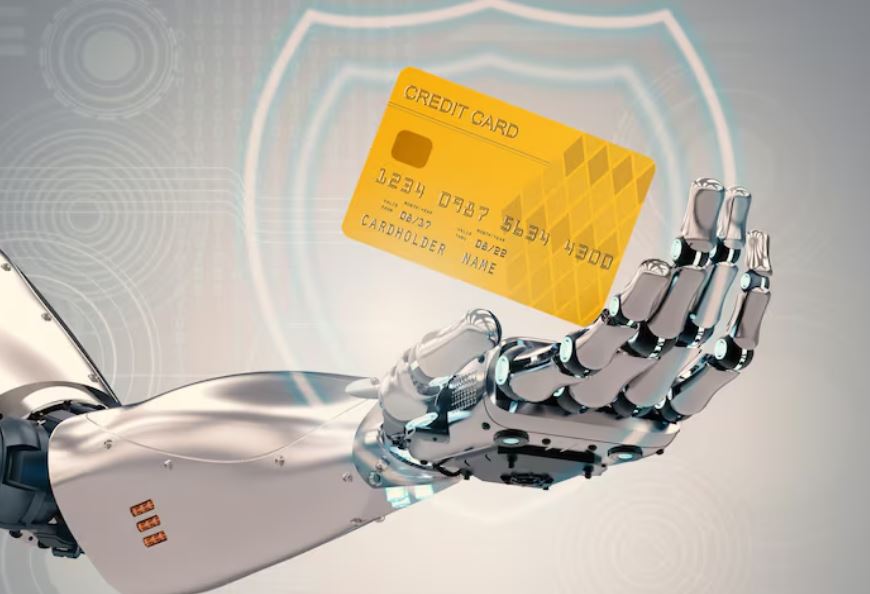
How AI and Robotics Are Quietly Transforming the Way Americans Buy, Sell, and Collect Trading Cards

Although it’s still unclear if fully autonomous purchasing will specifically make its way into the trading card industry, it seems inevitable. In that regard, authentication has already made progress. The grading and verification of cards and collectibles, which previously relied solely on human experts squinting at surface scratches under fluorescent lights, has been transformed by AI, according to Dan Van Tran, Chief Technology Officer of Collectors. Part of that work is now being handled by technology, which begs the obvious question of what happens to the graders.

At the heart of all of this is a genuine tension that hasn’t been settled yet. Fundamentally, collecting is an emotional activity. Not only are people purchasing assets, but they are also purchasing nostalgia, memories, and the ghost of a 1989 game-winning home run. An algorithm is not sensitive to that. Sales history, population reports, and recent auction data are all visible. A textural aspect of the hobby may be subtly eliminated when AI begins to mediate more of those transactions. For many collectors, the deal made at a card show and the handshake-ending negotiation are important, and it’s difficult to see a bot copying them.

However, Mann estimates that 85 million adult Americans possess trading cards. That amounts to about one-third of the nation. Inefficiency isn’t appealing for a market that size; it’s costly. Here, AI is solving actual issues rather than creating fictitious ones. Determining how much automation this specific aspect of American life can absorb before it ceases to feel like a hobby and begins to feel like a spreadsheet will be the challenge, as usual.

AI and Robotics Trading Cards
Share. Facebook Twitter Pinterest LinkedIn Tumblr WhatsApp Email
Previous ArticleTheory Trading Cards Are the Subject of the Most Cited Education Innovation Study Published in 2025
Next Article The Theory Card Featuring Angela Davis Is the One American Universities Are Adding to Their Syllabi
Melissa Bridwell

Melissa Bridwell is a Professor at Cambridge University and Senior Editor at theorycards.org.uk, where she writes about Theory Trading Cards, David Gauntlett's iconic sociology card series, and the thinkers who shaped modern cultural and media theory. Melissa brings both scholarly accuracy and sincere passion to every piece she writes. She has a strong academic foundation and a contagious enthusiasm for the nexus of ideas and collectibles. Her writing brings complex theory to life and makes it worthwhile, whether she is deciphering the philosophy behind a Foucault card or following Bell Hooks' cultural legacy.

Related Posts

How David Gauntlett Predicted That Education Would Need to Look More Like Entertainment — in 2001

June 17, 2026

Why the Panini vs. Topps NFL Battle Is the Most Important Business Rivalry in Collectibles

June 17, 2026

The Surprising Reason Theory Trading Cards Are Being Used in Corporate Diversity Training in 2026

June 17, 2026

Sociology Trading Cards Are Being Sold at Academic Conferences Now — and the Lines Are Long

June 17, 2026
Leave A Reply Cancel Reply

Don't Miss
News

Why the Best Investment in 2026 Might Already Be Sitting in a Shoebox in Your Childhood Bedroom

By Melissa BridwellJune 18, 20260

Somewhere there’s a jar. Perhaps it’s hidden behind a pile of outdated textbooks. Perhaps it’s…

David Gauntlett Made Foucault Collectible – Now He’s Being Asked to Do It for a New Generation of Thinkers.

June 18, 2026

How a 21-Card Academic Deck Created in 2000 Is More Useful Than Half the Sociology Textbooks Published Since

June 17, 2026

How David Gauntlett Predicted That Education Would Need to Look More Like Entertainment — in 2001

June 17, 2026

The $15 Card Deck That Changed How American Universities Teach Media Theory

June 17, 2026

Theory Trading Cards Are Going Into the Design of a New American Museum of Ideas – Here’s the Full Story.

June 17, 2026
About Us
About Us

We are a group of writers, researchers, educators, and academic enthusiasts who think that everyone should be able to understand complicated concepts, not just those who have access to postgraduate seminars or university libraries. Our editorial focus lies at the nexus of media studies, sociology, cultural theory, and the surprisingly rich collecting culture that has developed around David Gauntlett's seminal educational card series since its inception at theory.org.uk in 2000.

You've come to the right place whether you're a student discovering Foucault for the first time, a teacher searching for cutting-edge teaching resources, a collector searching for the AltaMira Press edition, or just someone wondering why a deck of cards with deceased theorists has become one of the most popular academic resources of the past 25 years.

Our Picks

Why the Best Investment in 2026 Might Already Be Sitting in a Shoebox in Your Childhood Bedroom

June 18, 2026

David Gauntlett Made Foucault Collectible – Now He’s Being Asked to Do It for a New Generation of Thinkers.

June 18, 2026

How a 21-Card Academic Deck Created in 2000 Is More Useful Than Half the Sociology Textbooks Published Since

June 17, 2026

How David Gauntlett Predicted That Education Would Need to Look More Like Entertainment — in 2001

June 17, 2026

The $15 Card Deck That Changed How American Universities Teach Media Theory

June 17, 2026
Disclaimer

The opinions published on theorycards.org.uk represent the views of the individual contributors who expressed them. They are published as third-party opinion and do not constitute the editorial position of theorycards.org.uk. We do not endorse, validate, or take responsibility for the accuracy, completeness, or suitability of third-party opinions published on this site.

All financial data, market analysis, investment-related viewpoints, and commentary on collectible valuations posted on theorycards.org.uk are solely intended for general informational purposes. It does not amount to investment advice, financial advice, or a suggestion for any particular course of action. Before making any financial or investment decisions, including those pertaining to the buying, selling, or appraisal of collectibles, we strongly advise speaking with a licensed and regulated financial expert.

Any political commentary, policy analysis, or viewpoint on governmental, legal, or regulatory issues posted on theorycards.org.uk solely represents the opinions of the named contributor and does not represent legal or political advice. Before acting on any political, legal, or regulatory information found on this website, we highly advise obtaining competent legal advice.

We publish third-party opinions as they are received from contributors and present news, updates, and developments as they are reported and made available. Any information on theorycards.org.uk should never be used as a replacement for expert financial, legal, academic, or other advice.

  • Home
  • Contact
  • Privacy Policy
  • Terms of Service
  • Disclaimer
  • About
  • Trading Cards
  • Trending
  • News
© 2026 ThemeSphere. Designed by ThemeSphere.

Type above and press Enter to search. Press Esc to cancel.

Sign In or Register

Welcome Back!

Login to your account below.

Lost password?