

The moment a new high-end release is released, a certain kind of quiet madness takes hold in the trading card hobby. Boxes that were never intended to be investment vehicles turn into just that in a matter of hours or even minutes. The most recent example is the 2025 Topps Resurgence Football set, which has been both fascinating and draining to watch develop over the past few weeks.
A single hobby box costs about $500 at retail. That’s not inexpensive by any measure, but it’s the figure that Topps established, the figure that appears in product announcements, and the figure that is meant to determine what collectors actually pay. Naturally, the secondary market has different opinions. In some areas of the resale market, boxes are already selling for $1,500 or more, which is three times the MSRP before a single card has been inserted.
It’s worth taking a moment to consider that. Three times. Due to limited supply, there won’t be a 20% increase. Not a small premium at a neighborhood card store that must pay for overhead. Due almost entirely to early hype and a scarcity mentality that the hobby has now fully normalized, the price is three times the suggested retail price.
At least some of that excitement is based on the actual product. Each hobby box promises five numbered parallels and three autographs, including one Rookie Patch Auto. The appeal of authentic licensed rookie cars with real team logos and real jersey patches is significant in a market that is still getting used to Topps having NFL licensing rights. That is understandable to collectors who have spent years removing unlicensed silhouette cards from Panini merchandise. There’s still a freshness to it, a feeling that this is how things were meant to appear all along.
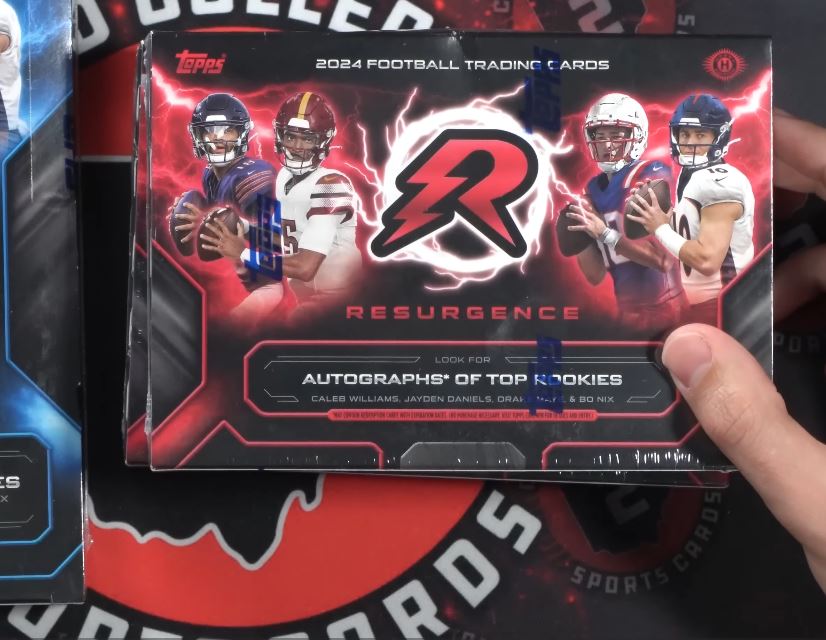
However, many collectors have stated that the pricing calculations don’t quite hold up under close examination. The box—$500 retail, 40 cards total—was examined in a YouTube analysis by Card Curiosity, and the conclusion was, at best, cautious. To make the expense worthwhile, you must hit a significant auto. You most likely won’t during most breaks. Naturally, every high-end card product carries a calculated risk, but at $500 per box, the risk is far greater than it is with a $30 blaster.
The contrast with how some retailers are choosing to react to the Topps Resurgence situation is what makes it so intriguing. CardVault by Tom Brady, which has been rapidly growing nationwide, recently pledged to maintain MSRP pricing on all Topps retail SKUs. They called this strategy “maniacally focused on giving value back to collectors.”That is not insignificant. A store’s public commitment to shelf price is significant in a hobby where secondary market markups have become the standard expectation. The intent is important, but whether it holds when demand peaks is a different matter.
However, CardVault isn’t nearby for the majority of collectors. In actuality, the market is fragmented, with prices varying greatly based on where you live, who is breaking the product in your neighborhood, and how quickly you moved when it first came out. Early adopters are sitting on boxes that are three times more valuable than what they paid. Those who were unsure are now debating whether the premium is worthwhile or if it would be wiser to wait for prices to decline.
When more boxes open and the pull rates become widely known, it’s still unclear if Resurgence will maintain its secondary market value. After initial excitement, prices for the 2024 version dropped fairly quickly. It is a recurring pattern. The first-week frenzy, which is the collective decision made by thousands of collectors at once that a box might cost more tomorrow, so it’s best to move now, doesn’t seem to change.
At this point, it almost doesn’t matter if that instinct makes sense. It’s simply how the pastime operates.
