

Any physical or virtual auction room has a point at which the bidding ceases to make sense according to traditional logic and begins to make sense according to an entirely different one. When a mint-condition Blastoise card from the original Pokémon base set went up for sale in Los Angeles and surpassed every pre-auction estimate that anyone had bothered to set, that moment came again. Although it wasn’t totally unexpected, it was somewhat unexpected.
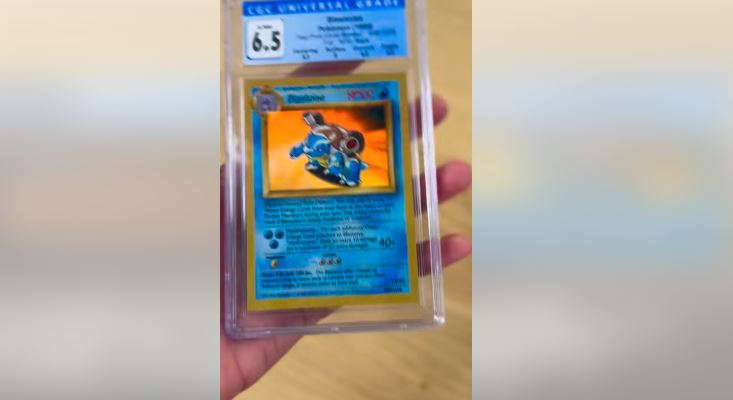
In the Pokémon card hierarchy, Blastoise has always held a specific position. Blastoise has its own weight among serious collectors, but Charizard receives the majority of the attention because the fiery dragon has a cultural significance that no other card in the hobby can match. A staple of the original base set, the water-type starter from Generation One, depicted in that iconic Ken Sugimori illustration with cannons mounted on its shell, was one of the cards that shaped Pokémon collecting in the late 1990s. You don’t come across a genuine mint copy with a PSA score of 10 very often.
Over the past year, E&A Collectibles, a Los Angeles-based company that is currently one of the more active names in the upscale Pokémon auction market, has been the focus of multiple high-profile sales. Depending on the edition and grade, the auction house has handled Blastoise cards that have sold for between $13,000 and $55,000. A perfect-grade specimen from the correct print run attracts significant attention. The estimates are merely a formality when a PSA 10 appears in their catalog. It is another matter entirely what the market actually does.
There has been some volatility in the larger Pokémon card market. Early in the pandemic, prices skyrocketed, cooled off significantly as the frenzy subsided, and have since settled into something more deliberate—less speculative fever, more thoughtful collecting. The result of that adjustment is a tiered market where the genuinely outstanding content, such as the PSA 10s from the first edition and shadowless print runs, has maintained its value and, in certain situations, continued to rise. The mid-grade copies riding momentum were the cards that overheated. The real treasures never truly fell.
This specific Blastoise sale might indicate something a little different from the usual successful auction outcome. There is a perception among collectors, at least among those who closely monitor PSA population reports, that there are fewer genuinely high-quality vintage base set holos available than the average person might think. These cards date back many years. The ones that managed to survive in true mint condition were mostly accidental; they were never shuffled into a deck, instead being forgotten in a binder sleeve, pulled once, and set aside. There are fewer of them in that state each year.
Scarcity is not the only factor that tends to produce the greatest outcomes. It’s a buyer with the resources and conviction meeting scarcity and nostalgia. Both are particularly prevalent in Los Angeles. Over the past 20 years, the entertainment industry and tech capital have brought in a generation of affluent adults who grew up with these cards and now have the means to obtain the versions they were unable to obtain as children. That combination appears in bidding rooms, but it doesn’t appear in a price guide.
It’s still unclear if this auction represents a new floor for premium Blastoise cards or just one outstanding outcome. The hobby is not linear. However, it’s difficult to avoid the conclusion that something more than nostalgia is at play when one piece of printed cardboard from 1999 generates the kind of numbers that would make a respectable down payment on a house—in Los Angeles, no less. These items are important, according to the market. How long, to whom, and at what cost are the questions.
