

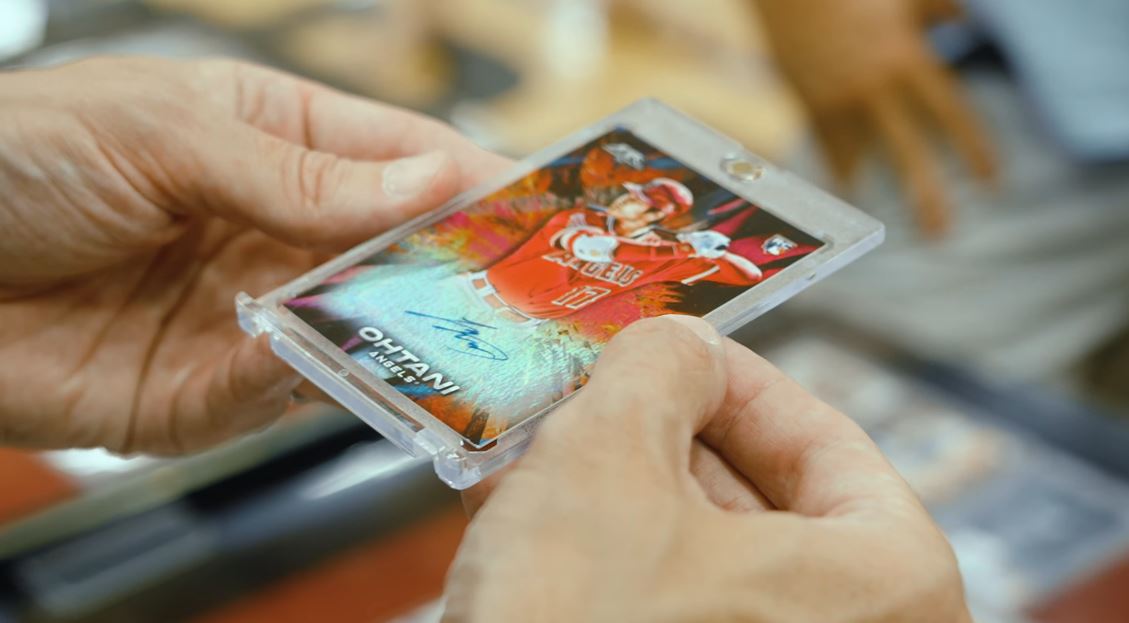
In baseball collecting, there’s a point at which the pastime ceases to feel nostalgic and becomes something completely different. When Eric Mandelkern paid $17,080 for a Mets pitcher’s trading card in March 2024, it was that moment. Not a legend of the Mets. Not in the Hall of Fame. A single debut, a single sleeve patch, a card linked to a single night.
It was an autographed Rookie Debut Patch card. Mandelkern, who is generally regarded as a disciplined collector who prioritizes quality over quantity, hasn’t really slowed down since.
The RDPA program, developed in 2023 by Topps and Fanatics, is based on an idea that seems almost too simple to describe. A tiny embroidered patch is placed on a player’s jersey sleeve upon his MLB debut. Throughout the game, an authenticator keeps an eye on it. The patch is removed, sealed, transported to a Topps facility in Texas, and then incorporated into a single trading card following the final out. Just one card. Just one participant. One first appearance. No parallels, reprints, or second chances. It’s a 1-of-1 on purpose, not by accident.
There are many rare cards in the program, so it’s not just the scarcity that appeals to collectors. It’s the particularity. You are not holding a piece of equipment obtained through a licensing agreement or a swatch cut from a batch jersey. The fabric that was on a player’s sleeve the night everything changed for him is in your hands. Serious collectors soon noticed that closer bond between object and moment, something the hobby had not yet witnessed.
The sales numbers speak for themselves. In March 2025, Paul Skenes’ RDPA, which was taken from a pack by a Los Angeles family, sold for $1.11 million at auction. It was purchased by Dick’s Sporting Goods and displayed in Pittsburgh. In January 2026, Nick Kurtz’s card cleared $516,000, making it the second-most expensive RDPA ever sold at a public auction. Jackson Holliday’s sold for $198,000. On the secondary market, the floor for lesser-known players has increased from about $1,000 in late 2024 to $3,000 or $4,000, and it is still rising.
All of this has been handled in real time by Mandelkern. He spent $171,000 on two cards in the two days leading up to Christmas 2024: $66,000 for Junior Caminero’s one-of-one and $105,000 for Jackson Chourio’s. His intentionally constructed collection of 200 cards is currently valued at about $2 million. He turned down a $200,000 offer for the Caminero card, which was three times what he had previously paid. It’s difficult not to interpret that choice in some way. He thinks this is headed in the right direction.
Additionally, Topps publicly acknowledged a collector named Daniel on social media for assembling seven RDPAs, which Topps claimed were nearly enough to field a baseball lineup. Sal Frelick, Shawn Dubin, Brice Turang, and others are on the cards. By no means are they household names. However, that is practically the point. These collectors are more than just star hunters. Regardless of what follows, they are pursuing the actual moment of arrival.
The larger hobby is still figuring out what’s changing underneath all of this. Once the unquestionable cornerstones of any serious collection, rookie cards are no longer automatically given priority. The most expensive public sale of Shai Gilgeous-Alexander in recent months wasn’t a rookie card. It was a Gold Logoman autograph associated with his season as MVP. The market is restructuring around particular events, particular items, and particular provenance. RDPAs are nearly a perfect fit for that reasoning.
As more cards go into circulation and more debuts accumulate every season, it’s still unclear if prices at the top of the RDPA market will remain stable. There were 251 cards in the 2024 batch. The scarcity calculation may change as the program develops and rosters change. Mandelkern appears to be aware of this. He talks about how hard it is to find the right cards at the right price and how the floor is high. “They’re getting harder and harder to acquire,” he said.
This aspect of the hobby feels particularly charged at the moment because of the tension between increasing mainstream awareness and limited supply. There’s a quiet confidence among collectors who entered early. Everyone else knows what it’s like to watch something happen so quickly that you’re not sure you’re keeping up.
