

The thought of losing a collection is almost intolerable. Not because of the money, though in serious Pokémon collecting circles, the money is very real; rather, it’s because of the true nature of a collection. It’s time. It is year after year of purposeful accumulation, decision after decision, card after card. When that type of archive is destroyed by a warehouse fire, the monetary loss is nearly insignificant compared to something more difficult to identify.
Penrose, a suburb of Auckland, was the scene of precisely that kind of destruction earlier this year. Early on a Sunday morning, a commercial storage facility on Maurice Road caught fire. Before the night was out, more than fifty firefighters arrived at the scene. According to reports making the rounds in New Zealand’s collector community, at least one serious Pokémon card collector whose vault-style private storage had been kept within the facility was among those who lost stored property in the fire.
The specifics of that particular loss are still coming to light, as they usually do following a fire: slowly, incompletely, and always with a bit more pain than the initial reports indicate. It is evident that the collection was sizable. Vintage sets, rare cards, and sealed goods are examples of inventory that requires patience and real skill in addition to money. Speaking with people who are familiar with the local collecting scene gives the impression that this wasn’t just a casual hobbyist situation. This person lost everything despite taking their hobby seriously and storing their collection appropriately.
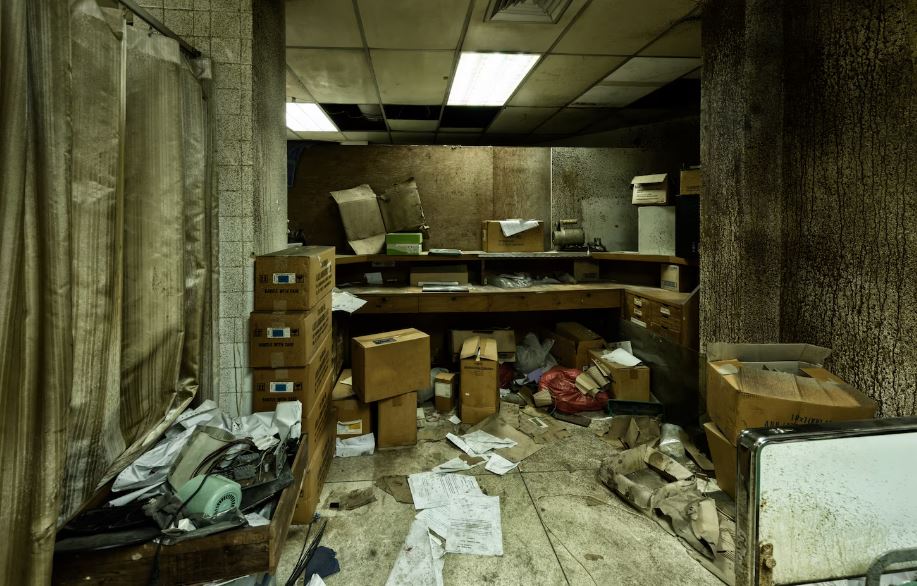
There is already documentation of the larger Penrose warehouse fire. Over fifteen years’ worth of artistic materials, including handcrafted stage pieces, aerial rigging, custom costumes, and recently donated theater seats, were lost in the same fire at the Dust Palace, a circus and performing arts organization. The same brutal result, but different industries and losses. Fire cannot tell the difference between a first-edition holographic Charizard and a hand-stitched circus costume. What it finds, it takes.
The market context is what makes the Pokémon angle especially challenging. Even ten years ago, the value of rare cards would have seemed ridiculous. Vintage packs that are sealed often fetch tens of thousands of dollars. At auction, graded high-condition cards from early sets have sold for more than six figures. An assessed value of hundreds of thousands of dollars, if not more, could be found in a serious private vault, the kind that a devoted collector might covertly amass over many years in New Zealand. It’s also important to remember that not all of that is readily covered by insurance. Standard home or storage policies frequently involve protracted disputes over condition and provenance, undervalue collectibles, and demand specific riders. The coverage just doesn’t reflect what many collectors actually own.
The issue of irreplaceability is another. Theoretically, money can be recovered. It is impossible to produce a 1999 Base Set Shadowless Charizard in gem mint condition. The particular cards, the particular grades, and the particular provenance of a collection are all unique. Collectors are intuitively aware of this, which is why hobby communities typically react quickly and emotionally to such losses. Globally, tales of young collectors banding together to replace misplaced cards have spread. The desire to assist is sincere. However, it never quite closes the gap.
Over time, the complete story of the Auckland collector might become more apparent. As of right now, all that’s left is the outline: a city, a warehouse, a fire, and an extinct collection. That is more than enough to comprehend for anyone who has dedicated years to creating something they are passionate about.
