

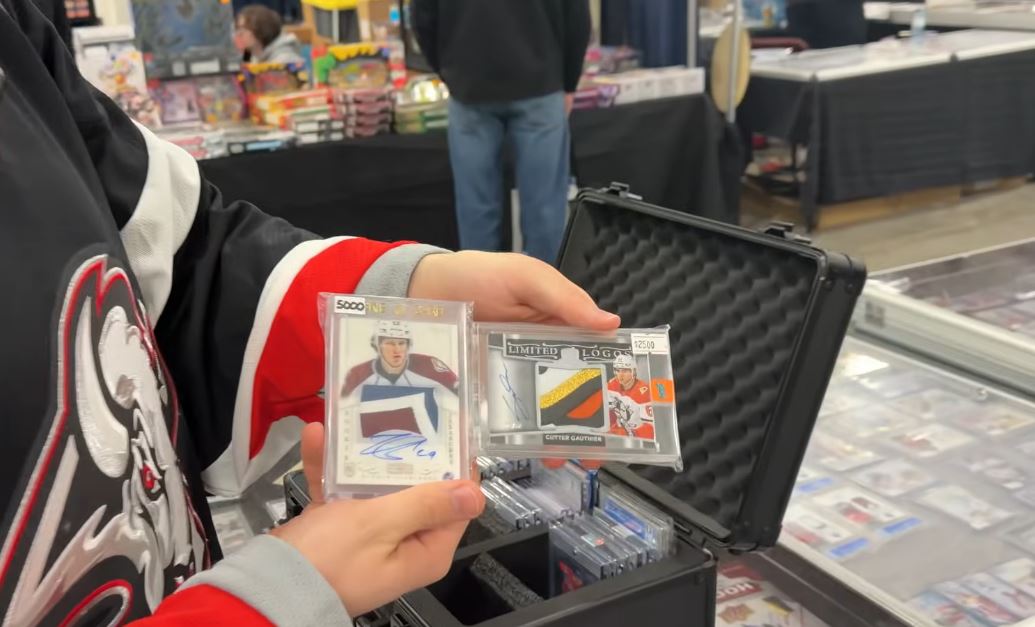
You never come across a particular type of collector on Instagram. No pulls captured in ring light, no unboxing reels, and no subscriber count to boast about. They arrive at the card show, move slowly across the floor, make their purchases in silence, and then depart. That kind has a reputation in Vancouver’s collecting scene, and sometimes it’s a vault that makes more noise than the owner would.
The card culture in Vancouver has grown over the years. The Vault Card Show has grown to be one of the most popular collector events in the city, with over 120 vendors and over 750 attendees per show. In 2024, the Vancity Card Show achieved even greater success, packing the East Building of the Vancouver Convention Centre for three full days with vendors and collectors from all over North America. There is undoubtedly a deeper and more serious collector ecosystem going on here than most people outside the hobby are aware of.
Stories circulate within that ecosystem. Some of them deal with cards, such as the Ruth-Gehrig Panini dual autograph that appeared at a Vancouver store in 2018. It was one of only 13 known to exist, and it was sitting quietly inside a box until the store owner opened it on camera and received a $20,000 offer right away. Such discoveries are not kept under wraps for very long. However, those with the actual volume—those who have been building for decades instead of pursuing a single whale—often do.
The majority of hobby observers may not be familiar with the owners of Canada’s largest private card collections. In collecting, that is not out of the ordinary. Seldom does the loudest voice in a room have the most extensive inventory. Time, patience, and a propensity to make purchases when no one else is around are what often result in collections that are truly astounding. A collector can quietly accumulate in ways that a flipper in the social media era simply cannot match if they build over twenty or thirty years, sourcing from estate sales, private deals, shows like The Vault, and connections made slowly over decades.
Vancouver has the right geography and culture. The city maintains its unique collector identity, shaped by hockey cards, OPC sets, and Canadian-specific releases that are missed by collectors south of the border, while remaining close enough to the American market to access cross-border inventory. A serious collector in Vancouver might have quietly owned the 1973 O-Pee-Chee RCMP set, a 55-card non-sports issue that has gained popularity in recent months, for years before anyone else gave a damn.
The expansion of The Vault Card Show reflects a larger trend. When a community event needs to relocate from a flea market floor to the Roundhouse Community Arts and Recreation Center, packing more than 120 vendor tables with vintage sports cards, One Piece, and Pokémon, it indicates that the base of serious collectors beneath it has grown to a certain size. There is a source for those vendors. Many of the things that go through those tables have previously been in private hands.
Speaking with attendees of these exhibitions gives me the impression that the city’s most remarkable collections are ones that the general public will probably never see. Growing slowly while the hobby goes through its boom and bust cycles, they are kept in climate-controlled spaces and arranged by set, year, and grade. It’s unlikely that the collector who secretly owns one of the biggest card vaults in Canada is monitoring social media analytics. It’s more likely that they’re monitoring PSA population reports and auction outcomes, just like collectors have done throughout history, but without an audience.
Part of the point is that anonymity. The theater is the card show floor. The vault is a completely different matter.
