

The way Jacques Lacan entered and remained a part of Parisian intellectual life is almost theatrical. By most accounts, he was a challenging child of bourgeois respectability who was born in April 1901 into a comfortable Catholic family on the Right Bank of the city. His dad was an oil and soap salesman. His mom prayed. In a move that must have upset the family dinner table, his younger brother became a monk. In the meantime, Lacan drifted in the direction of Spinoza, atheism, medicine, and ultimately the beautiful but dark maze of the human mind.
He was already running with an odd crowd by the late 1920s, when he was completing his medical training at Sainte-Anne Hospital. He was welcomed by the surrealists in Paris. He sat in rooms where André Breton held court, drank with Bataille, knew Dalí, and briefly worked as Picasso’s personal therapist—a detail that seems almost too good to be true.
| Bio Data | Details |
|---|---|
| Full Name | Jacques Marie Émile Lacan |
| Born | 13 April 1901, Paris, France |
| Died | 9 September 1981, Paris, France (aged 80) |
| Nationality | French |
| Education | Collège Stanislas de Paris; University of Paris (MD, 1932) |
| Profession | Psychoanalyst and Psychiatrist |
| School of Thought | Psychoanalysis, Structuralism, Post-structuralism |
| Notable Ideas | Mirror Stage, The Real, The Symbolic, The Imaginary, Objet petit a |
| Famous Work | Écrits (1966), The Seminar of Jacques Lacan |
| Doctoral Advisor | Henri Claude |
| Institutions | École Pratique des Hautes Études, University of Paris VIII |
| Influence | Continental philosophy, feminist theory, film theory |
Those years might have had a greater influence on him than any textbook. Reading him later gives me the impression that he was a surrealist all along. The love of paradox, the desire for provocation, and the frustration with straightforward communication all persisted.
He received quiet praise in psychiatric circles for his 1932 doctoral thesis on paranoid psychosis. However, Lacan’s goal went beyond diagnosis. He was curious about what constituted a self. In a 1949 paper that would go down in history, he finally provided the mirror stage as his solution. Lacan contended that you could witness the very fiction of identity being born when you watched a baby recognize its own reflection. When the child perceives a cohesive image, they mistakenly believe it to be true. Since then, we have been misidentifying ourselves.
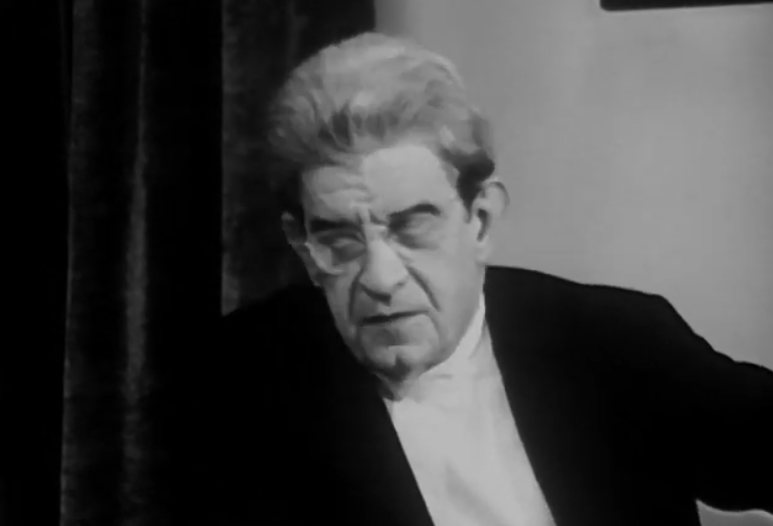
He started hosting seminars in 1953 that were a cross between lectures and plays. To hear him, people crowded into rooms. Maybe that was part of the reason they didn’t always get him. He spoke in spirals. On the board, he drew bizarre diagrams. He created concepts that are still used in graduate seminars from Buenos Aires to Berlin, such as the Real, the Symbolic, the Imaginary, and the objet petit a. There is ongoing debate among academics regarding whether all of this constitutes a cohesive system. Most likely, it doesn’t, and that’s probably unimportant.
His reputation was further enhanced in 1963 when he was expelled from the International Psychoanalytic Association. Colleagues who believed analysis required patience and time were enraged when he reduced sessions to a few minutes. He referred to his project as a “return to Freud,” even though Freud might not have understood. People like Slavoj Léižek, who maintains Lacanian ideas in cultural circulation through politics and film, are largely responsible for sustaining his afterlife today.
It’s difficult to ignore how peculiar it is that a man who wrote with such impenetrability ended up influencing how common people discuss desire, lack, and the gaze today. That would have likely made Lacan smile. or made a statement that no one could understand.

