

Bell Hooks’ insistence on using those lowercase letters has an almost stubborn quality. She took the name from Bell Blair Hooks, her great-grandmother, who was renowned in her family for having sharp opinions and a sharp tongue. She was the only one who decided to keep it modest and modest. She wanted readers to focus on the work itself rather than on her. Like most of her actions, this small act of refusal seemed to carry more weight than it actually did.
In Hopkinsville, Kentucky, a segregated town where her mother cleaned white families’ homes and her father worked as a janitor, she was born Gloria Jean Watkins in 1952. You can practically picture the long afternoons she spent as a child, standing at church recitals and reading aloud passages by Gwendolyn Brooks or Langston Hughes while her voice was still developing.
| Bio Data | Details |
|---|---|
| Full Name | Gloria Jean Watkins |
| Pen Name | bell hooks (lowercase, intentional) |
| Born | September 25, 1952, Hopkinsville, Kentucky |
| Died | December 15, 2021, Berea, Kentucky |
| Education | Stanford (BA), Wisconsin–Madison (MA), UC Santa Cruz (PhD) |
| Profession | Author, theorist, educator, cultural critic |
| Books Published | Nearly 40 works across essays, poetry, memoir, children’s literature |
| Best Known For | Ain’t I a Woman?, All About Love, Teaching to Transgress |
| Final Position | Distinguished Professor in Residence, Berea College |
| Founded | bell hooks Institute, 2014 |
She was frequently reprimanded for “talking back,” which years later became the subject of one of her most insightful books. Reading her memoirs gives me the impression that the criticism never really left her. It simply became more refined.
She started writing Ain’t I a Woman: Black Women and Feminism at the age of 19 while still a Stanford undergraduate. It wouldn’t be published until 1981, following a master’s degree at Wisconsin and a doctorate on Toni Morrison’s fiction at UC Santa Cruz.
The book had a greater impact than the academy anticipated. White feminism was accused of having a selective vision and of fostering solidarity while subtly excluding Black women. It was later named one of the most influential women’s books of the past 20 years by Publishers Weekly. It still appears to have been written this morning.
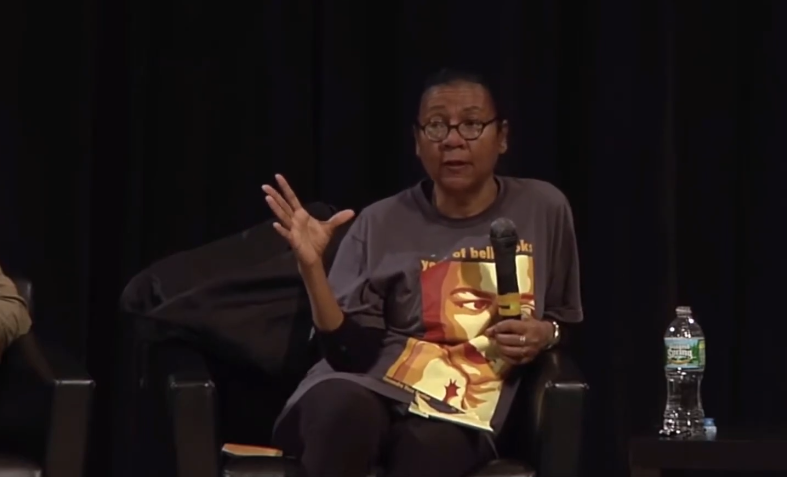
I believe that Hooks’ refusal to stick to a single register set her apart from her peers. Yes, she wrote academic criticism, but she also wrote children’s books, poetry collections with roots in the Appalachian hills she eventually returned to, and tender reflections on love. Published in 1999, All About Love became something of a cultural icon. On subways, people draw attention to it. They force it into the hands of friends who are experiencing a breakup. There aren’t many academics whose work has such a profound impact on everyday life.
Before going back to Kentucky in 2004 to work at Berea College, she taught at Yale, Oberlin, City College, and Stanford. It felt intentional, that return. She wrote about returning to the land, Wendell Berry, and what it meant to re-root oneself after years of intellectual restlessness in Belonging: a Culture of Place. A well-known Black feminist scholar choosing the Kentucky hills over the New York lecture circuit is subtly radical.
In the company of her family, she passed away in December 2021 at the age of 69. Poets, university presidents, and regular readers who had never met her all sent tributes in waves. Even now, it’s difficult to ignore how frequently her sentences appear in unexpected contexts. A wedding toast that quoted a passage about love. A teenager who has never heard her speak posted a comment about patriarchy. Maybe that’s the legacy she was aiming for all along. Not the name in lights. The words alone, working.

