

Anyone who has spent time on the card-collecting forums will recognize the point at which the pastime ceases to feel like a hobby. A PSA 10 rookie card of a quarterback selected six months ago is posted by someone. Offers flood in within minutes. The cost increases. A war of bidding begins. The player’s stats are not being discussed. They are discussing the previous week’s comp sales, population reports, and print runs. It feels more like watching a thinly traded stock on a volatile afternoon than collecting.
The transition from sentiment to conjecture is essential to comprehending the current state of the NFL rookie card market.
The market for football trading cards was estimated to be worth $638 million in 2024 and is expected to grow to almost $4.76 billion by 2034. These aren’t collector numbers. These are figures related to investments. And anyone who has observed Bitcoin’s ups and downs will recognize the logic behind the online resale ecosystem that is propelling that expansion. The supply is limited. Demand is sentimental. Additionally, price discovery takes place in real time on publicly accessible platforms.
The most visible arena is still eBay. Between early 2024 and mid-2025, trading card sales at Walmart’s online marketplace increased by 200%. It is now anticipated that Target’s annual card revenue will surpass $1 billion. In essence, the physical retail shelf has evolved into a feeder system for the secondary market, with packs bought in-store, torn, and listed online right away if the pull is strong enough.
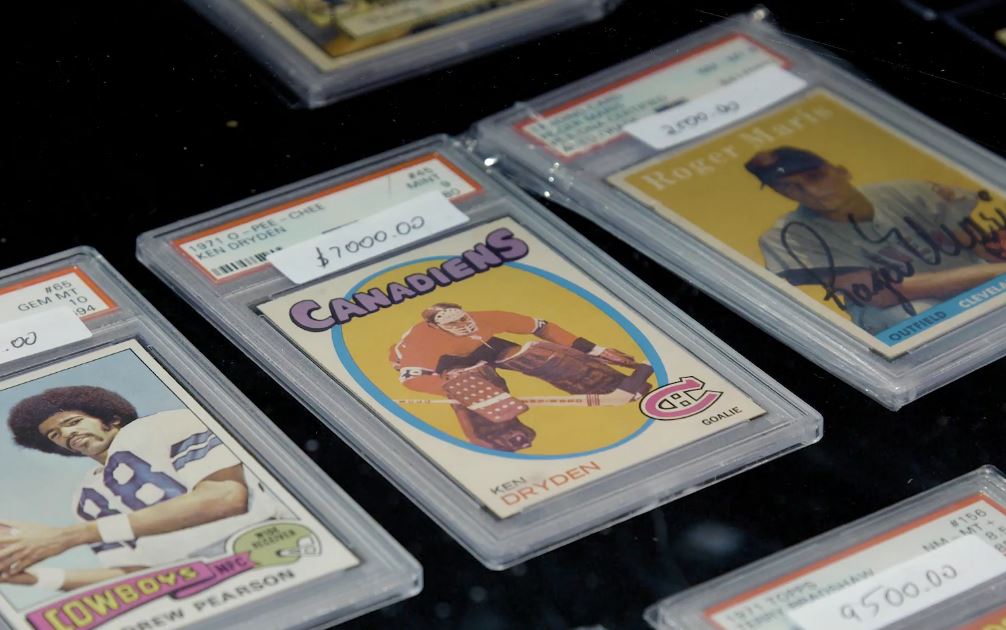
The timing mechanism incorporated into NFL rookie cards is what makes them particularly intriguing. When a player joins the league, collectors have about one season, sometimes less, to determine whether or not they believe in the athlete’s long-term potential. Cards are printed in limited quantities. Purchasing stock in a company prior to the earnings report is not all that different. The player is not accurately depicted on the card. It’s a wager on his future self.
A few years ago, a Tom Brady rookie card sold for $1.3 million. Although that sale garnered media attention, it actually created a mental model for a whole generation of collectors: these items have the potential to increase in value beyond what a savings account could provide. Naturally, conjecture ensued.
The pandemic seems to have changed who is involved in this market and how seriously they take it. Trading cards were a familiar enough concept with a tactile appeal that cryptocurrency lacked for a generation that grew up watching Bitcoin millionaires and normalized discussing alternative assets in group chats. It’s something you could hold. Give it a grade. Keep it in a case for protection. Not only was the scarcity expressed in code, but it was also evident.
As the blockchain equivalent of physical cards, grading firms like PSA have emerged as the de facto authentication layer. A PSA 10 denotes something tangible. It indicates that the card is practically flawless, and flawlessness in a small print run can fetch an astonishingly high price. A basketball card was reportedly sold for more than a million dollars by a sixteen-year-old. Similar to early Bitcoin lore, stories like that spread among collector communities.
Calling all of this a bubble and stopping there would be far too simple. The more realistic image is more disorganized. Some participants are sincere admirers who wish to share in the legacy of their favorite athlete. Others are methodical flippers that use spreadsheets to track market comparisons and population reports, operating almost entirely automatically. Both are part of the same ecosystem; they read the same price signals and buy and sell on the same platforms.
The underlying asset, a football player, may sustain an injury, be traded, or just not develop as anticipated, which makes the market erratic and actually dangerous. The player’s career is tracked by the card’s value in both purely emotional and sometimes logical ways. Some find it thrilling, while others find it extremely uncomfortable because of this uncertainty.
In any case, the market will continue to move. Which rookies should be held and which should be flipped will continue to be debated in the forums. Someone is watching a listing tick up in real time somewhere right now, debating whether to sell or hold off for another week.
