

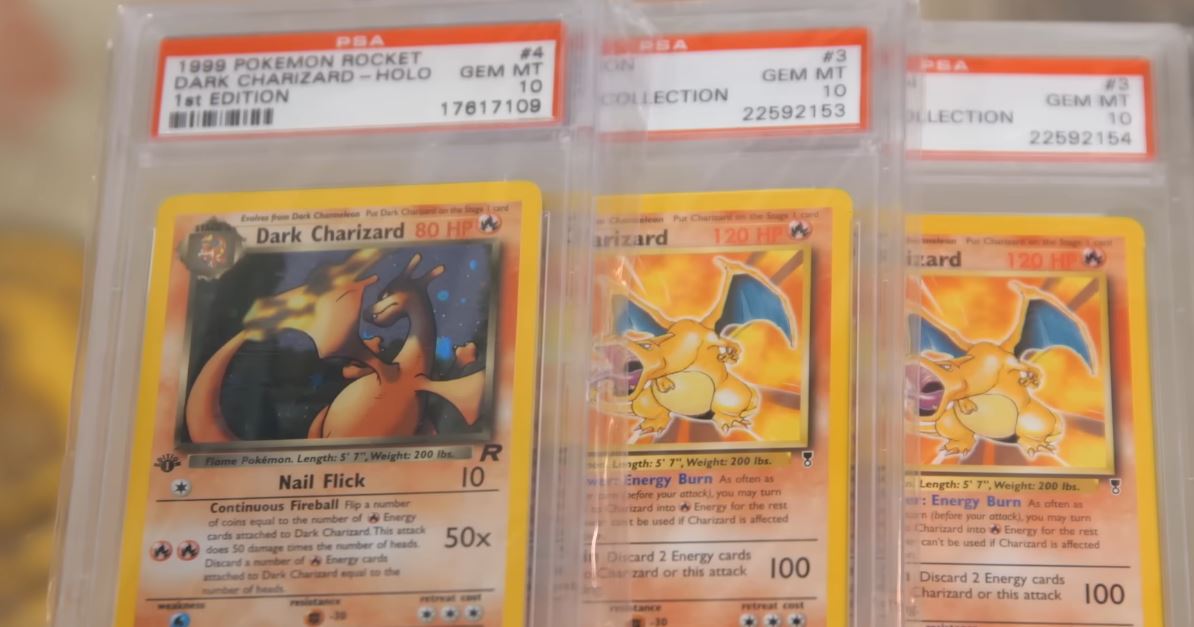
A Brisbane collector’s home insurer is more knowledgeable about a locked display case in his living room than he is about his plumbing or roof. It contains sleeved, graded, humidity-sensitive Pokémon cards that have all been professionally evaluated and cataloged. The amount was greater than the house’s insured value when he sat down to insure the collection. Nevertheless, he proceeded with it.
It seems ridiculous until you consider what the market has been doing in reality.
A single Pokémon card, a PSA 10-graded Pikachu Illustrator, sold for about $16.5 million USD at auction earlier this year. AJ Scaramucci, the son of former White House communications director Anthony Scaramucci, was the buyer. Logan Paul, the seller, had purchased it in 2021 for a small portion of that amount. The kind of return that worries real estate investors about their career choices is the difference between those two prices.
Furthermore, those numbers are not solely being driven by extremely rare cards. Quietly, the larger trading card market has been making its case. As of mid-2025, eBay reported that trading card sales had increased for ten consecutive fiscal quarters. Between early 2024 and the middle of last year, trading card sales on Walmart’s marketplace increased by 200%. Collector-forum statistics are not what these are. These figures are at the platform level.
The change has been noticeable in Australia in ways that go beyond spreadsheets. During his time in college, Jordan Hagicostas, a mid-twenties mortgage broker in Adelaide, began purchasing and storing sealed Pokémon booster boxes, primarily to help pay for living expenses. Knowing that sealed goods increase in value over time, he kept them in a wine cellar with steady temperatures and little light. He also resisted the temptation to open them. Over several years, the roughly $10,000 he contributed grew to between $30,000 and $40,000. sufficient to purchase an investment property. Ten years ago, this kind of result would have sounded like a joke.
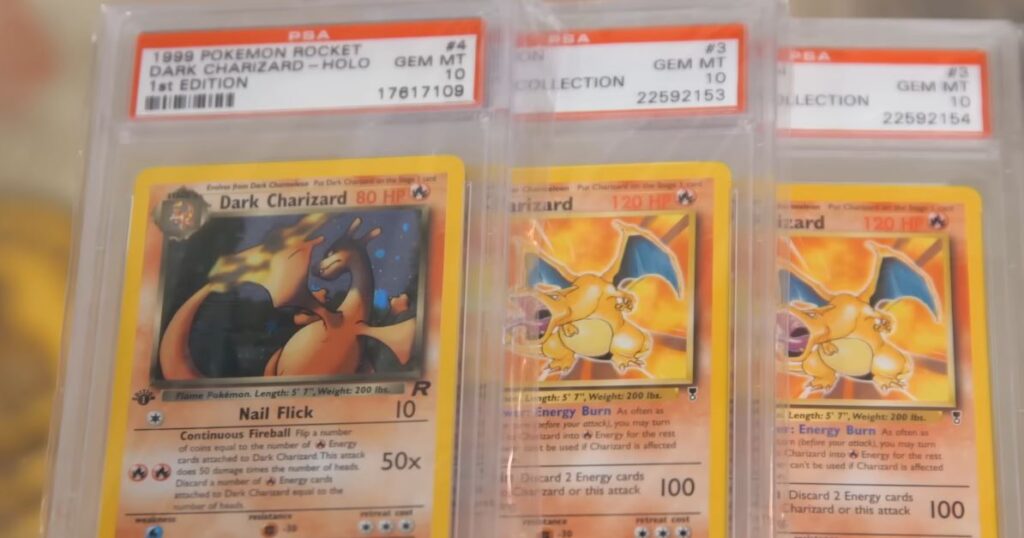
The reasoning behind the Brisbane collector’s predicament is similar but more complex. The insurance math begins to make more sense when a collection includes graded first-edition cards, limited print runs from sets that are no longer produced, and examples that have been authenticated to almost perfect condition. It is possible to rebuild a house. It is not possible to produce a PSA 10 Charizard from the Base Set again.
Conversations with serious collectors frequently touch on the point at which they realize their hobby has gone beyond what they had anticipated. Andrew Braund, a 37-year-old Dorset teaching assistant, found his childhood cards in an attic and had his friend, who owns a trading card shop, discreetly estimate the value of three of the Charizards. Braund talked about almost having a panic attack. At auction, those three cards brought in $41,000, more than enough to cover his wedding expenses.
This year marked the 30th anniversary of the Pokémon Company, which is by no means a niche business with estimated franchise revenues of $147 billion USD. Over the course of three decades, what was once a children’s card game printed in Japan has evolved into something more akin to a parallel financial instrument, one that an increasing number of people are treating with the same seriousness as shares or property.
It is still genuinely unclear if that level of seriousness is justified in the long run. When the generation responsible for the nostalgia ages out of active spending, markets based on nostalgia tend to cool. However, the Brisbane collector with the insured binder is not currently placing an unreasonable wager. The receipts are beginning to support his claim that he is simply making a different one.
