
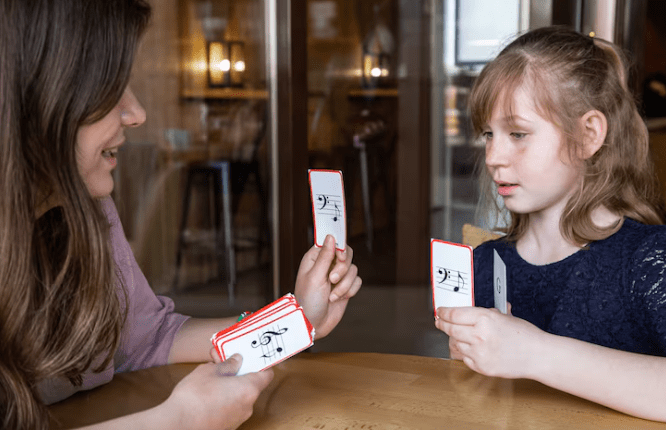
Something a little out of the ordinary has been going on in a suburban Ohio classroom that appears unremarkable from the hallway and has motivational posters that no one reads anymore. A stack of cards is produced by a teacher. They all have names, theories, and schools of thought. Dewey, John. Paulo Freire. Bloom, Benjamin. She raises one. A pupil narrows their eyes. guesses incorrectly. When something truly surprises them, the class laughs—not in a cruel way. After that, they debate the solution for four minutes in a row.
As it happens, the test results are appalling. However, no one wants to give up playing.
This is how learning appears when it is effective, and it is occurring at a time when the majority of data indicates that it is not. Last month, Stanford and Harvard released their most recent Education Scorecard, which contained unsettling but familiar news: school closures and Zoom fatigue were not the cause of the pandemic-era decline in reading and math. It was the continuation of a gradual unraveling of gains that had taken a generation to accrue and had been quietly building since about 2013. The researchers refer to it as a “decade-long learning recession,” and the term carries weight that a single test result can never fully convey.
What preceded that discovery is what makes it hurt a little more. Math proficiency among fourth and eighth graders increased so steadily between 1990 and 2013 that an average fourth grader in 2013 could perform tasks that a sixth grader could in 1990. One of the authors of the Scorecard, Thomas Kane of Harvard, stated that it may be one of the most significant social policy achievements of the past fifty years that hardly anyone is aware of. The racial divide was closing. Reading was getting better. Reading Kane’s words gives the impression that someone is describing a house that caught fire after the insurance expired.
The precise cause of the trend reversal before COVID arrived to exacerbate the situation is still unknown. However, teachers who have worked in real classrooms rather than merely analyzing data often highlight something more difficult to quantify than test scores: the gradual decline of intellectual risk-taking. Pupils were no longer willing to make incorrect guesses. Perhaps they were never taught that making incorrect guesses was a necessary part of the process.
Even though it seems insignificant, this is where the theorist flashcard test becomes engaging. Students who participated in competitive, game-based quizzes demonstrated measurably better retention, not because the games were simple but rather because the low-stakes failure felt safe, according to a 2020 literature review of Kahoot-style learning tools. When you make a mistake on Vygotsky in front of your classmates and quickly figure out why, it encodes the right answer in a way that multiple-choice worksheets seldom do. It turns out that failure requires both a second chance and an audience in order to be useful.
For years, Dominic Randolph, the headmaster of Riverdale Country School in the Bronx, has presented a version of this argument, sometimes to audiences who are courteously dubious. He eliminated AP courses. He opposed the use of standardized testing. At a school where parents were primarily concerned with Harvard acceptance rates, he continued to speak about grit and character. He may have been ahead of his time, or the rest of the educational system may be just now beginning to address the issues he raised in 2007.
Beneath the alarm, the Stanford and Harvard data do provide a glimmer of hope. States that have changed the way reading is taught through legislation are seeing improvements. Supported by federal relief funds, the lowest-income districts made an unexpected comeback. The recession won’t last forever. It’s simply unyielding.
The instructor in that Ohio classroom raises another card. Bloom’s Taxonomy was founded by Benjamin Bloom. Immediately, a hand is raised. Once more, incorrect response. This time, however, the student is genuinely curious and is leaning forward with his or her elbows on the desk.
No standardized test has ever been able to measure that posture, that specific type of wanting. Perhaps that’s precisely the issue.
