
You might discover something unexpected on the desks if you walk into a particular type of American classroom right now, such as a graduate seminar in California or a community college in Ohio. not laptops. not textbooks. cards. Like baseball cards used to be in suburban bedrooms across the nation, these cards were small, laminated, illustrated cards with theorists on them and concepts printed on the back. They were arranged neatly in little decks.
It seems like a ruse. Perhaps it is. However, the numbers are beginning to make it more difficult to ignore the fact that something genuine is taking place here.
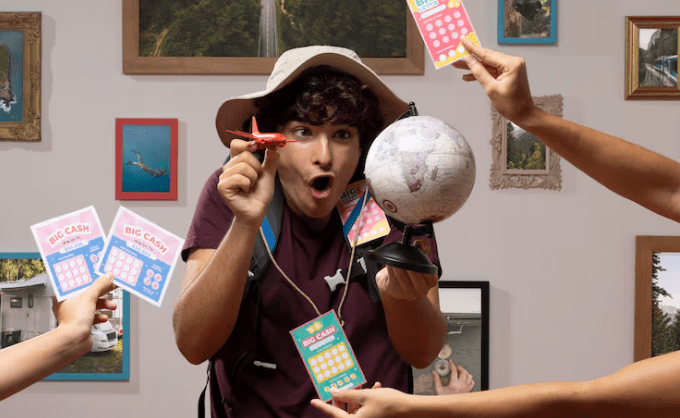
The market for trading cards was estimated to be worth $15.8 billion in 2024 and is expected to grow to $23.5 billion by 2030. Of course, not all of that is theory cards—sports and Pokémon continue to be the dominant forces—but theory trading cards have carved out a niche in the educational space that has expanded more quickly than most academics feel comfortable admitting. The institution doesn’t seem to have made up its mind about how to handle this—whether to accept it or wait for it to go away.
Skeptics find it frustrating that the research continues to yield results. The Trading Card Effect, which educational researchers have documented, supports the long-held belief among active learning practitioners that students retain information better when they are physically handling, organizing, or negotiating it. It appears that the brain recognizes the difference between a card in your hand and a bullet point on a slide.
Theory trading cards are particularly intriguing because they force abstract concepts into a structure designed for exchange and competition. Freire next to bell hooks, Foucault across from Bourdieu. The argument is won by whoever has the stronger card, or at least that’s how some educators frame it. That seems almost disrespectful. It’s difficult to ignore the fact that when the same concepts are presented in a more tactile, gamified format, students who are most resistant to dense theoretical reading appear to interact differently.
Even so, the academic world is not totally cozy. Some academics have always been uncomfortable with gamification, questioning whether simplification becomes distortion. Is Derrida truly able to be held on a trading card? Most likely not completely. However, a fifty-minute lecture given to an auditorium that is half asleep doesn’t either. Research increasingly indicates that the conventional lecture format is not the gold standard it was once thought to be. By tuning out, millions of students have silently confirmed this.
Who is paying attention to the alternatives is currently changing. Teachers who used to scoff at anything that looked like a game are now forced to adopt strategies that actually work by data. The kind of peer interaction, delayed gratification, and strategic thinking that screens seldom require are provided by trading cards, including theoretical ones. Calculating trade values, saving money for particular cards, and debating condition and rarity are all significant mental exercises for kids.
It’s still genuinely unclear if theory trading cards will become a standard in American education or stay a curiosity. Academic progress is often slow, and for good reason. On the tables, however, are the decks. The pupils are paying attention. And despite their reluctance, the professors at the whiteboard are beginning to glance over their shoulders.
