
Close Menu
Theory CardsTheory Cards
  • Home
  • Privacy Policy
  • Terms of Service
  • Disclaimer
  • About
  • Trading Cards
  • Trending
  • News
What's Hot

The Sociology Trading Card That Every Media Studies Student in America Knows by Heart — but Can’t Explain

May 4, 2026

The Storage Unit Flip That Started With Baseball Cards and Ended With a $40,000 Discovery

May 4, 2026

Why Theory Trading Cards Are the Sociology Equivalent of Flashcards — and Infinitely More Fun

May 4, 2026
Theory CardsTheory Cards
Subscribe Login
  • Home
  • Privacy Policy
  • Terms of Service
  • Disclaimer
  • About
  • Trading Cards
  • Trending
  • News
Theory CardsTheory Cards
  • Home
  • Buy Now
Home » Why bell hooks Refused to Capitalize Her Own Name (And What It Really Meant)
News

Why bell hooks Refused to Capitalize Her Own Name (And What It Really Meant)

Melissa BridwellBy Melissa BridwellMay 4, 2026No Comments3 Mins Read
Facebook Twitter Pinterest LinkedIn Tumblr WhatsApp VKontakte Email
Bell hooks
Bell hooks
Share
Facebook Twitter LinkedIn Pinterest Email

Bell Hooks’ insistence on using those lowercase letters has an almost stubborn quality. She took the name from Bell Blair Hooks, her great-grandmother, who was renowned in her family for having sharp opinions and a sharp tongue. She was the only one who decided to keep it modest and modest. She wanted readers to focus on the work itself rather than on her. Like most of her actions, this small act of refusal seemed to carry more weight than it actually did.

In Hopkinsville, Kentucky, a segregated town where her mother cleaned white families’ homes and her father worked as a janitor, she was born Gloria Jean Watkins in 1952. You can practically picture the long afternoons she spent as a child, standing at church recitals and reading aloud passages by Gwendolyn Brooks or Langston Hughes while her voice was still developing.

Bio DataDetails
Full NameGloria Jean Watkins
Pen Namebell hooks (lowercase, intentional)
BornSeptember 25, 1952, Hopkinsville, Kentucky
DiedDecember 15, 2021, Berea, Kentucky
EducationStanford (BA), Wisconsin–Madison (MA), UC Santa Cruz (PhD)
ProfessionAuthor, theorist, educator, cultural critic
Books PublishedNearly 40 works across essays, poetry, memoir, children’s literature
Best Known ForAin’t I a Woman?, All About Love, Teaching to Transgress
Final PositionDistinguished Professor in Residence, Berea College
Foundedbell hooks Institute, 2014

She was frequently reprimanded for “talking back,” which years later became the subject of one of her most insightful books. Reading her memoirs gives me the impression that the criticism never really left her. It simply became more refined.

She started writing Ain’t I a Woman: Black Women and Feminism at the age of 19 while still a Stanford undergraduate. It wouldn’t be published until 1981, following a master’s degree at Wisconsin and a doctorate on Toni Morrison’s fiction at UC Santa Cruz.

The book had a greater impact than the academy anticipated. White feminism was accused of having a selective vision and of fostering solidarity while subtly excluding Black women. It was later named one of the most influential women’s books of the past 20 years by Publishers Weekly. It still appears to have been written this morning.
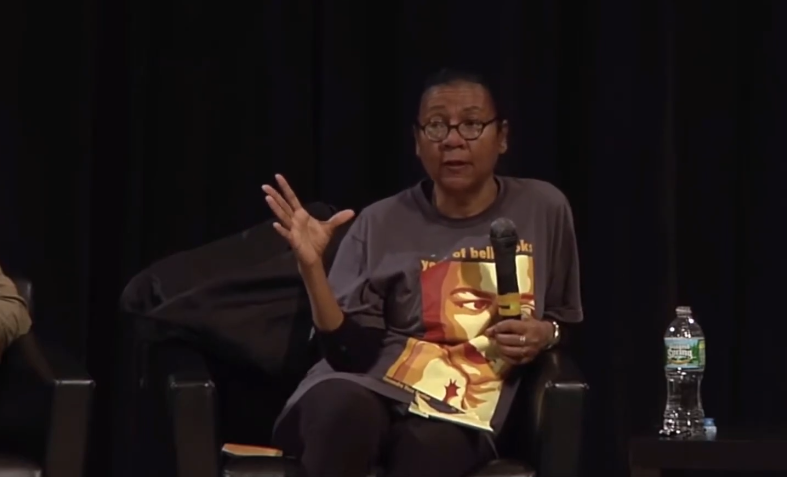
Bell hooks
Bell hooks

I believe that Hooks’ refusal to stick to a single register set her apart from her peers. Yes, she wrote academic criticism, but she also wrote children’s books, poetry collections with roots in the Appalachian hills she eventually returned to, and tender reflections on love. Published in 1999, All About Love became something of a cultural icon. On subways, people draw attention to it. They force it into the hands of friends who are experiencing a breakup. There aren’t many academics whose work has such a profound impact on everyday life.

Before going back to Kentucky in 2004 to work at Berea College, she taught at Yale, Oberlin, City College, and Stanford. It felt intentional, that return. She wrote about returning to the land, Wendell Berry, and what it meant to re-root oneself after years of intellectual restlessness in Belonging: a Culture of Place. A well-known Black feminist scholar choosing the Kentucky hills over the New York lecture circuit is subtly radical.

In the company of her family, she passed away in December 2021 at the age of 69. Poets, university presidents, and regular readers who had never met her all sent tributes in waves. Even now, it’s difficult to ignore how frequently her sentences appear in unexpected contexts. A wedding toast that quoted a passage about love. A teenager who has never heard her speak posted a comment about patriarchy. Maybe that’s the legacy she was aiming for all along. Not the name in lights. The words alone, working.

Bell hooks
Share. Facebook Twitter Pinterest LinkedIn Tumblr WhatsApp Email
Previous ArticleErving Goffman – The Sociologist Who Made the Ordinary Feel Strange
Next Article Jacques Lacan – The French Psychoanalyst Who Refused to Be Understood
Melissa Bridwell

Melissa Bridwell is a Professor at Cambridge University and Senior Editor at theorycards.org.uk, where she writes about Theory Trading Cards, David Gauntlett's iconic sociology card series, and the thinkers who shaped modern cultural and media theory. Melissa brings both scholarly accuracy and sincere passion to every piece she writes. She has a strong academic foundation and a contagious enthusiasm for the nexus of ideas and collectibles. Her writing brings complex theory to life and makes it worthwhile, whether she is deciphering the philosophy behind a Foucault card or following Bell Hooks' cultural legacy.

Related Posts

The Storage Unit Flip That Started With Baseball Cards and Ended With a $40,000 Discovery

May 4, 2026

The Card Featuring Stuart Hall Is the One Every Cultural Studies Professor Wants in Their Deck

May 4, 2026

Jacques Lacan – The French Psychoanalyst Who Refused to Be Understood

May 4, 2026

Erving Goffman – The Sociologist Who Made the Ordinary Feel Strange

May 4, 2026
Leave A Reply Cancel Reply

Don't Miss
Trading Cards

The Sociology Trading Card That Every Media Studies Student in America Knows by Heart — but Can’t Explain

By Melissa BridwellMay 4, 20260

When you walk through the back rows of a freshman lecture hall in late September,…

The Storage Unit Flip That Started With Baseball Cards and Ended With a $40,000 Discovery

May 4, 2026

Why Theory Trading Cards Are the Sociology Equivalent of Flashcards — and Infinitely More Fun

May 4, 2026

The Card Featuring Stuart Hall Is the One Every Cultural Studies Professor Wants in Their Deck

May 4, 2026

Theory.org UK Trading Cards – How a Quirky Academic Project Became a Cult Classic

May 4, 2026

What Are Theory Trading Cards and Why Are Academics Obsessed With Them

May 4, 2026
About Us
About Us

We are a group of writers, researchers, educators, and academic enthusiasts who think that everyone should be able to understand complicated concepts, not just those who have access to postgraduate seminars or university libraries. Our editorial focus lies at the nexus of media studies, sociology, cultural theory, and the surprisingly rich collecting culture that has developed around David Gauntlett's seminal educational card series since its inception at theory.org.uk in 2000.

You've come to the right place whether you're a student discovering Foucault for the first time, a teacher searching for cutting-edge teaching resources, a collector searching for the AltaMira Press edition, or just someone wondering why a deck of cards with deceased theorists has become one of the most popular academic resources of the past 25 years.

Our Picks

The Sociology Trading Card That Every Media Studies Student in America Knows by Heart — but Can’t Explain

May 4, 2026

The Storage Unit Flip That Started With Baseball Cards and Ended With a $40,000 Discovery

May 4, 2026

Why Theory Trading Cards Are the Sociology Equivalent of Flashcards — and Infinitely More Fun

May 4, 2026

The Card Featuring Stuart Hall Is the One Every Cultural Studies Professor Wants in Their Deck

May 4, 2026

Theory.org UK Trading Cards – How a Quirky Academic Project Became a Cult Classic

May 4, 2026
Disclaimer

The opinions published on theorycards.org.uk represent the views of the individual contributors who expressed them. They are published as third-party opinion and do not constitute the editorial position of theorycards.org.uk. We do not endorse, validate, or take responsibility for the accuracy, completeness, or suitability of third-party opinions published on this site.

All financial data, market analysis, investment-related viewpoints, and commentary on collectible valuations posted on theorycards.org.uk are solely intended for general informational purposes. It does not amount to investment advice, financial advice, or a suggestion for any particular course of action. Before making any financial or investment decisions, including those pertaining to the buying, selling, or appraisal of collectibles, we strongly advise speaking with a licensed and regulated financial expert.

Any political commentary, policy analysis, or viewpoint on governmental, legal, or regulatory issues posted on theorycards.org.uk solely represents the opinions of the named contributor and does not represent legal or political advice. Before acting on any political, legal, or regulatory information found on this website, we highly advise obtaining competent legal advice.

We publish third-party opinions as they are received from contributors and present news, updates, and developments as they are reported and made available. Any information on theorycards.org.uk should never be used as a replacement for expert financial, legal, academic, or other advice.

  • Home
  • Privacy Policy
  • Terms of Service
  • Disclaimer
  • About
  • Trading Cards
  • Trending
  • News
© 2026 ThemeSphere. Designed by ThemeSphere.

Type above and press Enter to search. Press Esc to cancel.

Sign In or Register

Welcome Back!

Login to your account below.

Lost password?