

This story has an almost entirely American feel to it. One of the biggest airlines in the world couldn’t bring itself to print a few collectible cards for its customers. Instead, the pilots’ union took action. The entire situation has now turned into an unexpectedly insightful window into the airline’s relationship with its own front-line staff.
For those who don’t know, airplane trading cards exist and have been for many years. They were first distributed by Delta Air Lines in 2003 to mark the retirement of its fleet of McDonnell Douglas MD-11 aircraft. Alaska Airlines had been doing it covertly since the 1990s. The cards were a specialized insider custom for the majority of that period, something that most travelers never encountered but aviation enthusiasts knew to inquire about. Then there was TikTok. Over three million cards were collected by Delta customers in a single year by 2024.
For some reason, American Airlines still had nothing to offer. In airport concourses, travelers were approaching pilots, occasionally making extra trips to the cockpit during boarding, and requesting cards that didn’t exist. It turned into a particular kind of embarrassment that could have been prevented.
The Allied Pilots Association intervened in this situation. More than 16,000 American Airlines pilots are represented by the APA, which developed and financed its own trading cards. The Boeing 787 Dreamliner soaring over Paris, the Airbus A321 over Sydney, and the Boeing 777-300ER wearing a centennial retro livery inspired by the old Flagship paint scheme from the Douglas DC-3 era are examples of truly beautiful designs. They can be picked up by pilots at crew bases and distributed aboard. All of it was covered by the union.
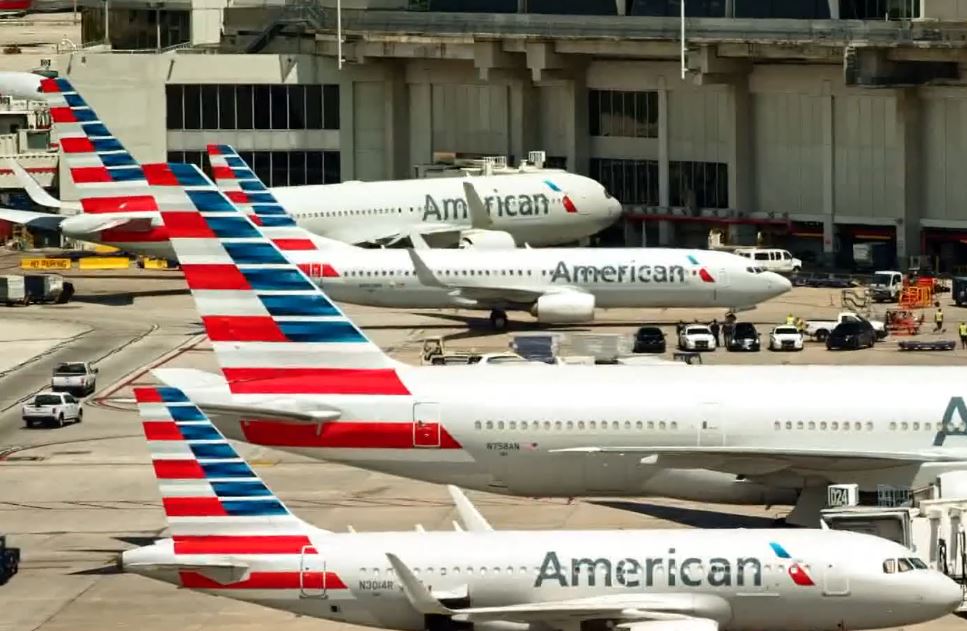
It makes sense that there have been differing opinions within the pilot community. There were pilots who were actually relieved. When a child approaches the cockpit door with evident excitement and is turned away empty-handed, there is a certain helplessness that results. Other pilots objected to the expense, pointing out quite rightly that union dues are meant to support members’ professional interests rather than fund customer experience benefits that may belong in the airline’s marketing budget.
The true story here is that tension. Because, whether on purpose or not, the APA effectively made American Airlines management appear unconcerned in contrast. Press releases regarding trading cards are released by Delta. Delta discusses how fleeting interactions between a pilot and a passenger can have a significant impact and how even seemingly insignificant actions can influence a flight’s memory. Although that wording may sound like corporate soft focus, it represents a sincere belief in what fosters loyalty. In contrast, Americans passed on something that signals a lot and costs very little.
It’s possible that the union took this action on purpose to express their dissatisfaction in a way that would appeal to travelers as well as industry watchers. For a while now, the APA has been publicly critical of management, and this grievance is far more visually appealing than the majority of labor disputes. A stack of exquisitely drawn cards depicting a Dreamliner over the Eiffel Tower is difficult to dispute.
For whatever reason, American Airlines eventually revealed a trading card program with a centennial theme that will launch in early May. It’s unclear if the union’s action hastened that decision. However, the events themselves tell a tale: pilots provided funding that management refused, the internet took notice, and the airline complied.
In one version of the story, it is merely a peculiar anecdote. However, it fits into a broader pattern of American Airlines battling the more delicate aspects of managing an airline, such as the culture, the little things, and the things that elevate an ordinary flight into something memorable. None of that will be resolved by trading cards. They do, however, provide an exceptionally clear example of the gap.
