

The T206 Honus Wagner card is one of the most mythologized artifacts in American sports collecting. Only a small number of the American Tobacco Company’s 1909–1911 production—estimates range from 50 to 200 originally distributed, with about 57 known survivors—remain in any condition. The origin story of the scarcity is almost romantic: it is said that Wagner wanted the card removed from cigarette packs to prevent kids from purchasing tobacco in order to obtain his likeness. Accidental legend was the outcome. Authenticated examples now fetch millions of dollars.
Because of this, the card is almost always a target for fraud. In the lengthy and peculiar legal history of the card, the most instructive case involves Bill Mastro, who was once among the most influential figures in the sports memorabilia industry. In a pastime that had developed from childhood nostalgia into a significant financial market, Mastro oversaw Mastro Auctions and carried significant weight. He entered a guilty plea to mail fraud in U.S. District Court in October 2013.
He acknowledged in that plea that he had physically trimmed the edges of the most well-known Wagner card in existence, the so-called Gretzky Wagner, using a paper trimmer to sharpen its corners and artificially raise its grade. This was something collectors had long suspected but were unable to prove.
The PSA 8 card had gone through exceptional hands. In 1991, Wayne Gretzky and Bruce McNall paid $451,000 for it. The Arizona Diamondbacks’ owner, Ken Kendrick, purchased it in 2007 for $2.8 million. It is hard to ignore the irony that a card whose grade dictated its multimillion-dollar value had been physically altered by the man who had initially assisted in determining that value.
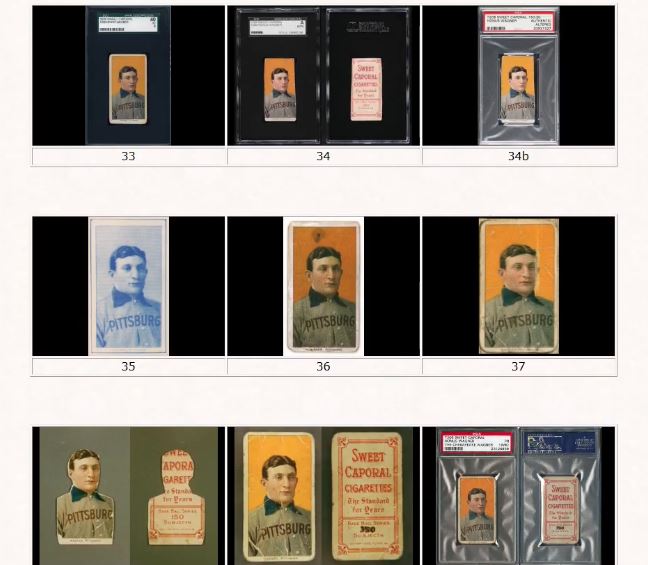
Mastro’s actions alone are not the most concerning aspect of the larger fraud picture; rather, it is the duration of the deception. It’s surprisingly easy to trim a card. A pair of scissors or a scalpel can be used to remove softened corners or frayed edges, giving the impression that a worn card is sharper than it was. Even seasoned graders can be tricked if done carefully. A higher numerical grade is given to the modified card. The price is higher for the higher grade. A condition that the card never truly earned is paid for by the buyer.
In addition, Mastro was accused of selling a fake 1869 Cincinnati Reds trophy and a fake lock of Elvis Presley’s hair, as well as engaging in shill bidding, which is the practice of placing phony bidders in auctions to raise prices. There weren’t any opportunistic crimes. It was a methodical approach to fraud disguised as connoisseurship.
In a 2025 fraud report, PSA, the top third-party grading company, stated that the market is currently overrun with counterfeit cards, placing a burden on detection capabilities. The company claims that a sizable percentage of high-value submissions, including Wagner cards, have been found to be fake. Since the early 2000s, the hobby has become much more professional, but so have the deception techniques.
For anyone who grew up believing that baseball cards were valuable items, there is a subtle sense of disappointment about all of this. The T206 Wagner, a piece of early 20th-century printing created in a Virginia factory and featuring a man who may have removed it from production out of principle, is still a truly remarkable artifact. That history exists and has value.
However, the case that Mastro’s fraud created—as well as the pattern of phony and altered Wagners that continue to surface today—serves as a reminder that in any market where extreme value is created by scarcity, someone will ultimately determine that the story is more valuable than the truth.
