

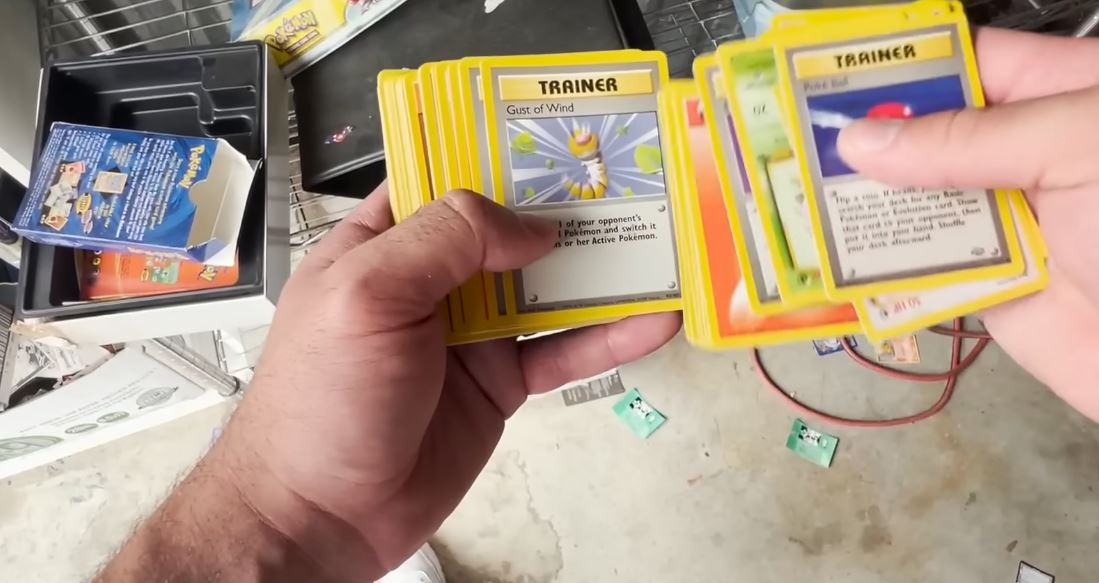
Collector communities remember a certain moment. In early 2025, a buyer named PFM performed what most would consider an obscure forensic check on a batch of Pokémon prototype cards, which are thought to have been created in 1996, before the base set was ever made available in Japan. The analysis did not yield a verification. A date stamp was on it. June 29, 2024. printed on a card that should have been around thirty years old.
One of the biggest fraud cases the trading card industry has ever seen was uncovered by that one discovery. It also subtly argued that forensic-grade authentication is now required in this market, something that serious collectors and large auction houses had been debating for some time. It’s turning into the floor.
The method PFM employed is printer steganography, which is the use of hidden watermarks that are incorporated into the majority of contemporary commercial printers to encode data such as the machine’s serial number and the date a page was created. This has long been used by governments and law enforcement to track down fake documents. It was not anticipated that it would come up in a Pokémon card scandal. However, the money has disappeared there, and the fraud has followed.
The magnitude of the stakes contributes to the explanation. Rare individual Pokémon cards have sold for hundreds of thousands of dollars at reputable houses like Goldin, and the Pokémon card market is estimated to be worth $15.8 billion worldwide. At auction, a prototype Pikachu brought in $20,000. A CGC-graded Shadowless Charizard sold for $300,000. The motivation to create convincing fakes ceases to be theoretical when such figures are presented. Before the watermark was discovered, the prototype cards in question, which came from what seemed to be the personal collection of a former Creatures employee involved in the TCG’s original creation, had already made several million dollars in sales.
Looking back, it’s remarkable how much the system depended on human trust instead of technical verification. Many of the cards had been authenticated by CGC, one of the top grading companies in the business, working closely with the former employee. It was assumed that professional grading and provenance from a recognized source were sufficient. The hidden timestamp on the printer indicated otherwise. By the time the story was widely reported, CGC had not released a statement, but auction houses acted swiftly to halt active listings.
A conversation that was already gaining traction was advanced by the fraud. In this field, authentication technology has been developing quickly. PSA incorporated AI-powered micro-texture fingerprinting, which has 62-micron accuracy in rejecting counterfeit goods. Tens of thousands of scans are recorded every day thanks to SGC’s integration of NFC chips into its slabs for phone-tap verification. In less than 0.5 seconds, Goldin and Beckett were able to send slab data straight to bidding pages. As the market develops, these are evolving from fringe experiments to competitive standards.
The market for trading card authentication services is expected to grow at a rate that reflects how seriously buyers and sellers are now taking provenance, reaching over $6.6 billion by 2033. Automation has increased, turnaround times have become more stringent, and grading companies are under more pressure than ever to do it correctly.
The prototype situation still has many unanswered questions. It is still unclear whether all of the cards were fraudulent, whether there is an original print run, and what part, if any, the former employee played. There might be some genuine cards in there somewhere. The case revealed a discrepancy between what customers believed they were receiving and what the verification procedure could truly verify, which is less ambiguous.
The lesson is uncomfortable for collectors, but it’s probably long overdue. A grading company’s visual evaluation and the seller’s word may no longer be sufficient in a market where a card’s value can fluctuate from thousands to zero depending on authenticity. There are forensic tools available. Now, the question is whether the industry is moving quickly enough to make use of them.
