

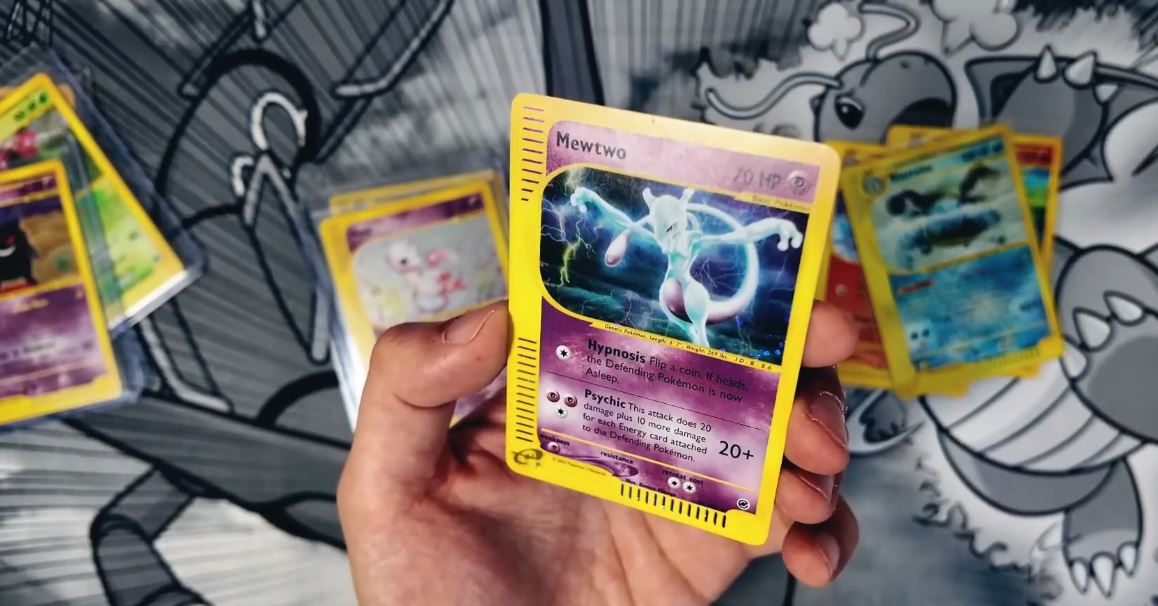
There has always been a certain low-budget thrill to storage unit auctions; it’s the kind of thing that has a TV show for a reason. The majority of the time, buyers leave with broken appliances, outdated furniture, and a general feeling that they overpaid. Occasionally, however, something emerges that makes the entire circuit worthwhile. That’s exactly what happened with a recent auction of what seemed to be a forgotten Pokémon collection, and the details have been circulating in collector circles with the kind of energy that doesn’t go away very quickly.
At first glance, the broad strokes are nearly unbelievable. After the original owner stopped making payments, a storage unit filled with Pokémon cards—many of which were still sealed and some of which appeared to be from the 1990s—went up for auction. The winning bid came in at about $50,000. Who you ask and, more crucially, how meticulously those cards are graded and sold will determine whether the buyer received their money back.
The state of the cards is what makes this specific find more intriguing than a normal auction score. Skilled collectors have a tendency to focus on that detail above all else. It is one thing to have a binder full of Pokémon cards from the 1990s. A carefully arranged binder of nearly-mint 1990s cards kept out of the light and moisture in cardboard boxes is quite another. A gem-mint copy can cost several thousand dollars more than a first-edition card that has been played sparingly. When you multiply that by the size of the collection, the math becomes truly serious.
At these auctions, there’s always conjecture about how something like this gets abandoned in the first place. The credit card expiration problem is one theory that frequently circulates: someone sets up autopay, the card changes, the payment stops, and months go by before anyone notices. It’s not insurmountable. A more straightforward theory is that the original owner was unaware of the collection’s increased value. For the majority of the 2000s, Pokémon cards from the 1990s were practically worthless. It wasn’t until about 2020 that the market took off, and even then, not everyone kept up. It’s possible that someone kept a collection from their childhood, thought it was worthless, and finally decided to sell the item.
In the United Kingdom, Wades Venture, the YouTuber behind one of the more popular storage unit auction channels, discovered a comparable find: about 1,000 vintage Pokémon cards hidden inside a binder inside a unit he purchased for about $2,000. He calculated that the gaming gear alone would cost $60,000. On top of that were the cards. He called the discovery “genuinely rare” after ten years of work. That kind of viewpoint is important. It’s important to pay attention to someone who has opened hundreds of units and still calls something out of the ordinary.
The world of storage auctions is not without its challenges. There have been instances where the original owner came forward after the fact and occasionally negotiated a substantial markup to repurchase their possessions. A $500 winning bid on a unit that subsequently turned out to contain a collection estimated in the millions was the subject of one widely shared account. For $1.2 million, the buyer allegedly sold everything back to the original owner. It’s difficult to confirm whether that story is totally true, but it captures a reality about the area: value is erratic, and the emotional and legal stakes can quickly rise.
Stories like this evoke a mixture of excitement and mild anxiety in collectors who are observing from the outside. The notion that an important piece of Pokémon history could be forgotten for years in a climate-controlled locker before showing up at a public auction for tens of thousands of dollars serves as a reminder that the market for these items is now extremely serious. It has long since ceased to be a nostalgic pastime. At auctions that most people wouldn’t bother going to, those who treat these cards like assets are the ones who pay attention.
