
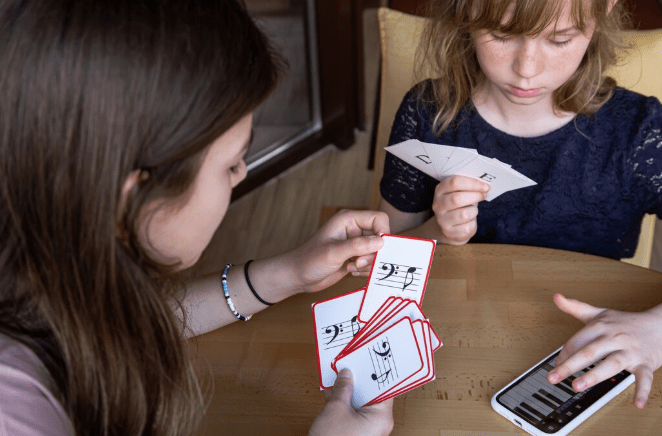
Observing a university professor distribute trading cards at the beginning of a lecture has a subtly odd quality. Not a textbook. No reading from a dense photocopy. Just a little laminated card with a theorist’s face on one side and a summary of their main points on the other. It seems almost too easy. Nevertheless, it seems to be effective in classrooms from Boston to Bournemouth.
Originally created by Bournemouth University as a teaching tool for first-year media students, theory trading cards have begun to appear in settings far beyond introductory seminars. corporate training facilities. consultancies for management. There are strategy workshops where no one has the time or patience to read a chapter of Weber before their morning coffee goes cold. The format is probably intended to be easily transported.
It’s worthwhile to take a step back and consider why something so low-tech is currently becoming popular. America no longer reads as much as it once did. That is a proven change in focus and behavior, not a moral assessment. Shorter bursts of information consumed more quickly on smaller screens in messier settings have been quietly displacing long-form reading for years. The interesting thing is that people’s desire to comprehend big concepts hasn’t diminished. Simply put, they are no longer able or willing to spend three hundred pages with them.
It appears that theory trading cards have arrived at this precise time. According to Bruno Latour’s theory of knowledge and circulation, they are truly mobile. Anthony Giddens’ card can go from a classroom to a coffee shop to a team meeting without losing anything important. Giddens is still in charge. Structuration theory is still in use. Simply put, it’s something that can be held and looked at.
The same psychology that kept kids trading sports cards in school hallways for decades seems to play a part in how these cards function. According to research on sports card collecting—fan motivations examined through Reddit comment threads, of all places—people collect for a variety of reasons, including social connection, completion satisfaction, and the sheer joy of owning something tangible in a virtual world. At least two of those impulses are effectively tapped into by theory cards. You talk about them. You contrast them. You give them to the person seated across from you.
The reason why practitioners from genuinely different industries appear to be independently drawn to the same tool is more difficult to explain. Professors of media and management consultants typically don’t reach for the same shelf. It’s possible that the card format encourages handling, discussion, and disagreement in ways that a slide deck just cannot. You can arrange two cards side by side and ask which thinker best describes your issue. Weber or Marx? Giddens or Foucault? Scrolling through a presentation is not the same as that kind of physical comparison.
Whether the format expands beyond its present, comparatively specialized audience is still up for debate. When teaching tools become formulaic, they can quickly lose their effectiveness. A card’s value depends on the discussion it sparks. It’s just a laminated piece of paper with a person’s face on it when used improperly.
However, it’s difficult not to believe that this is real as it spreads quietly and without much fanfare. Not a revolution in schooling. Something more compact and possibly stronger than that. a structure that meets people where they are, not where we would like them to be.
